Women
Women's Winter Jackets & Down Coats
47 articles
Free standard shipping
Are you sure you want to remove the following product from the cart?
Are you sure you want to remove the following product from the wishlist?
Clicca qui se desideri acquistare nel nostro negozio online: United States.
Your current state
Necessary
Preferences
Statistics
Marketing
Women
Filter
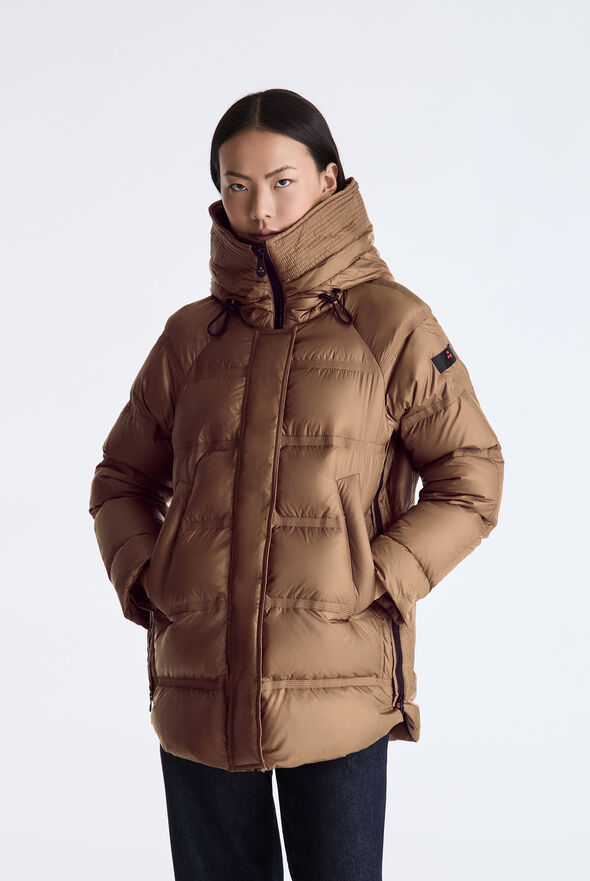
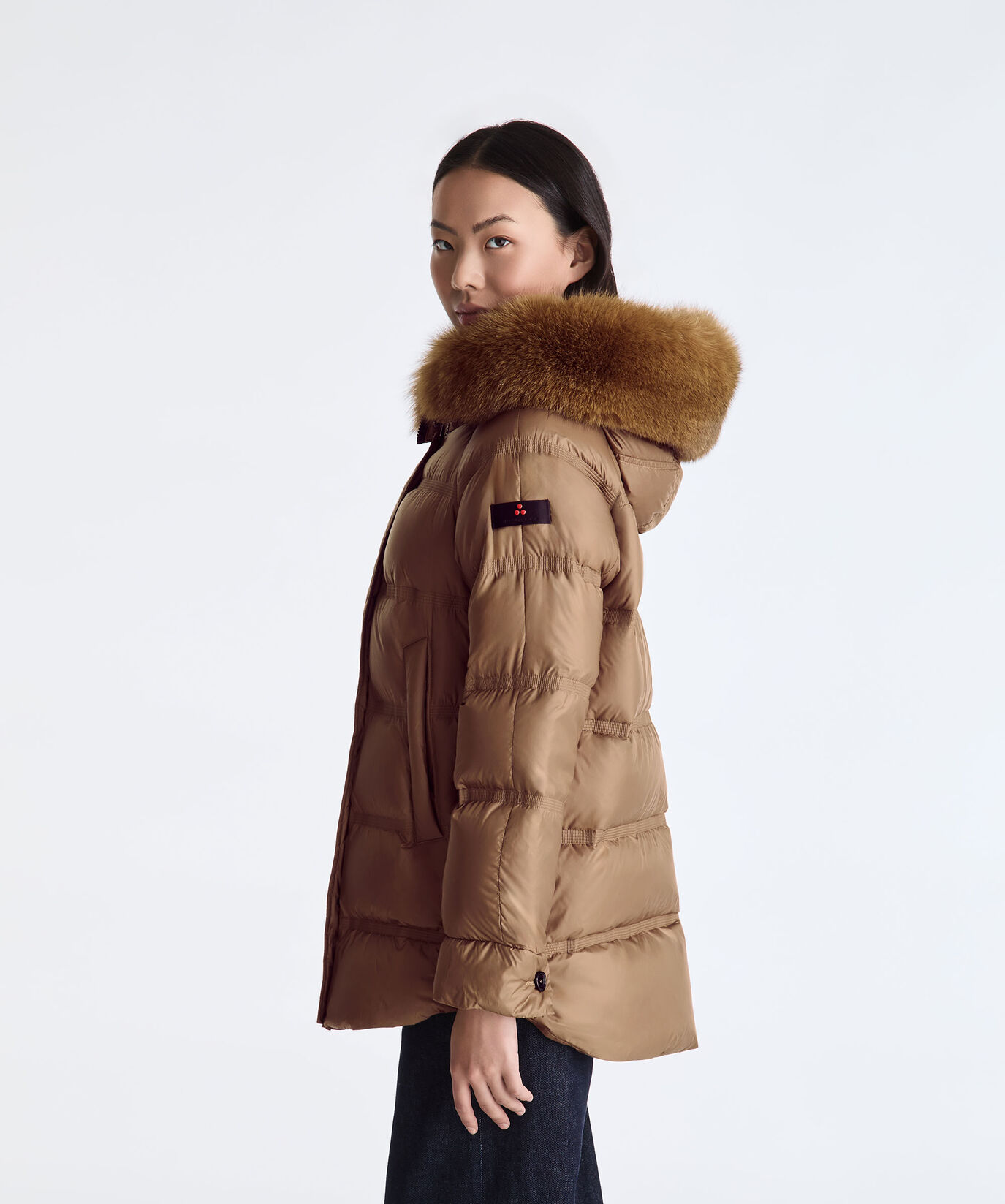
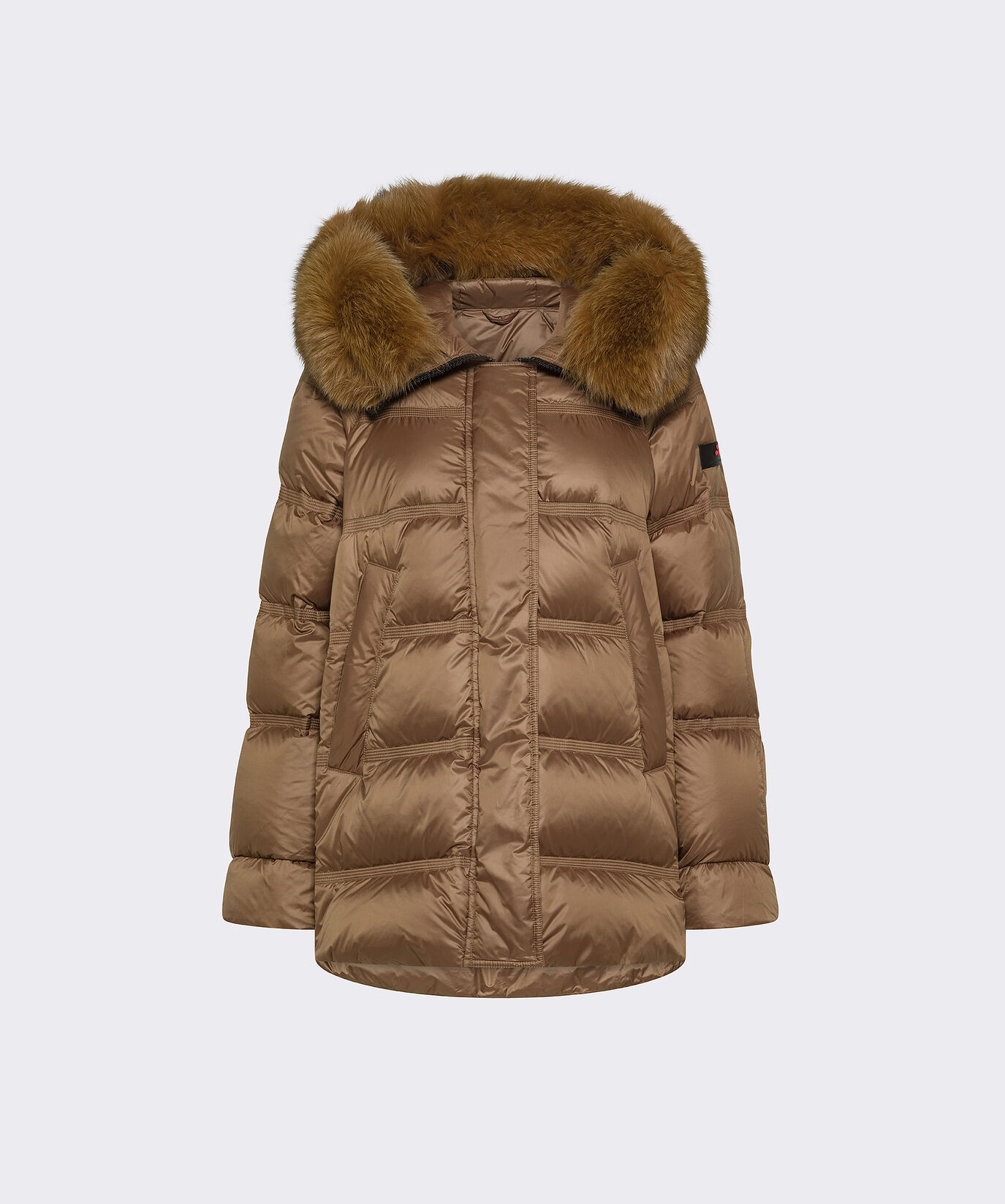
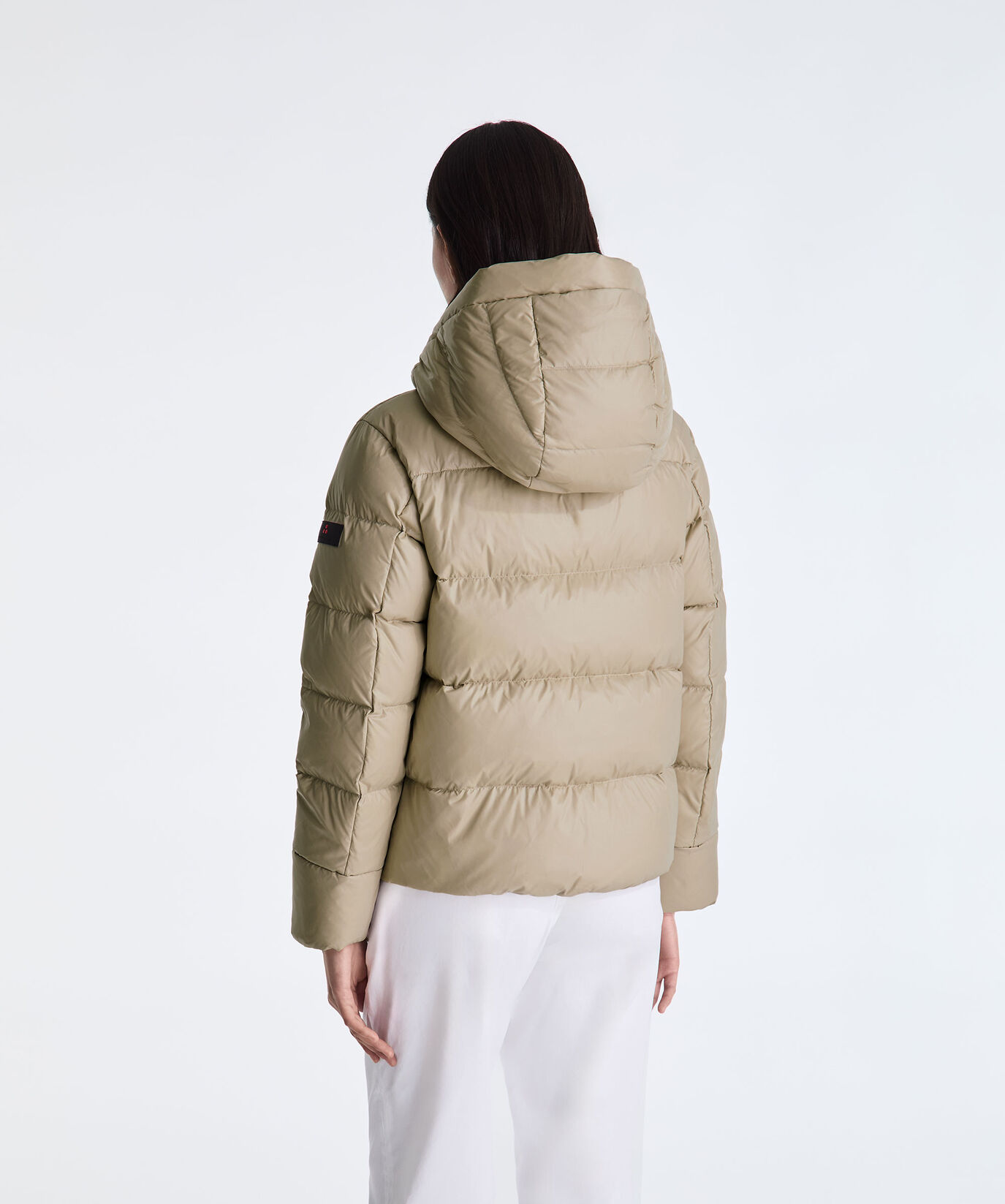
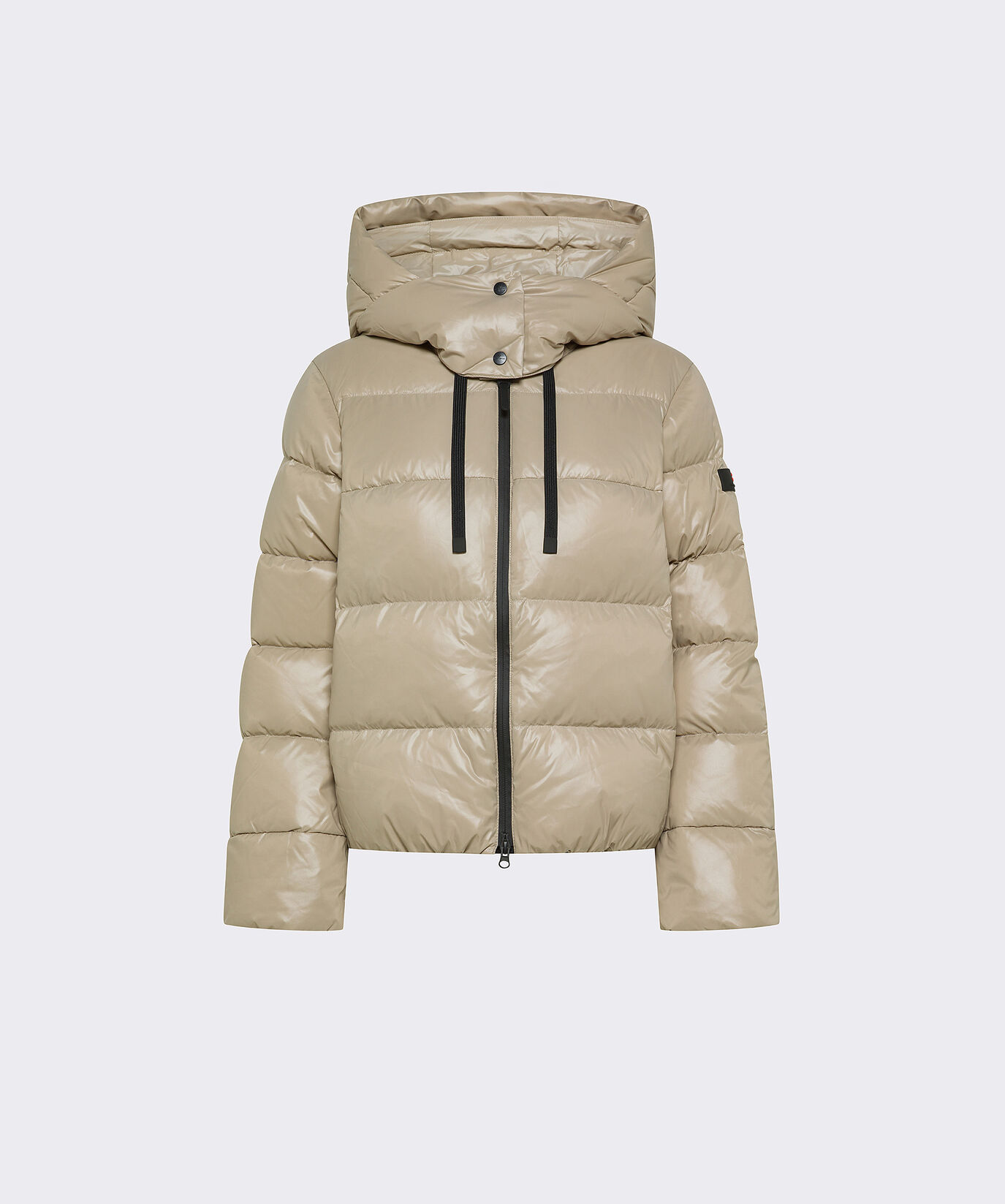
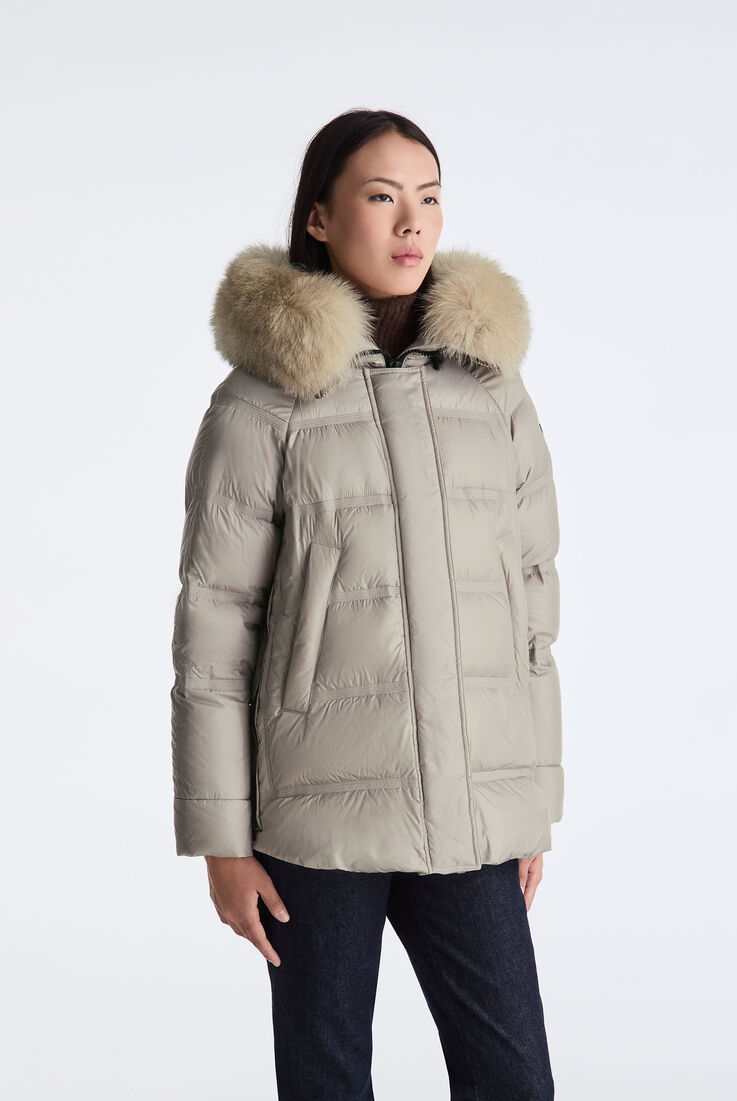
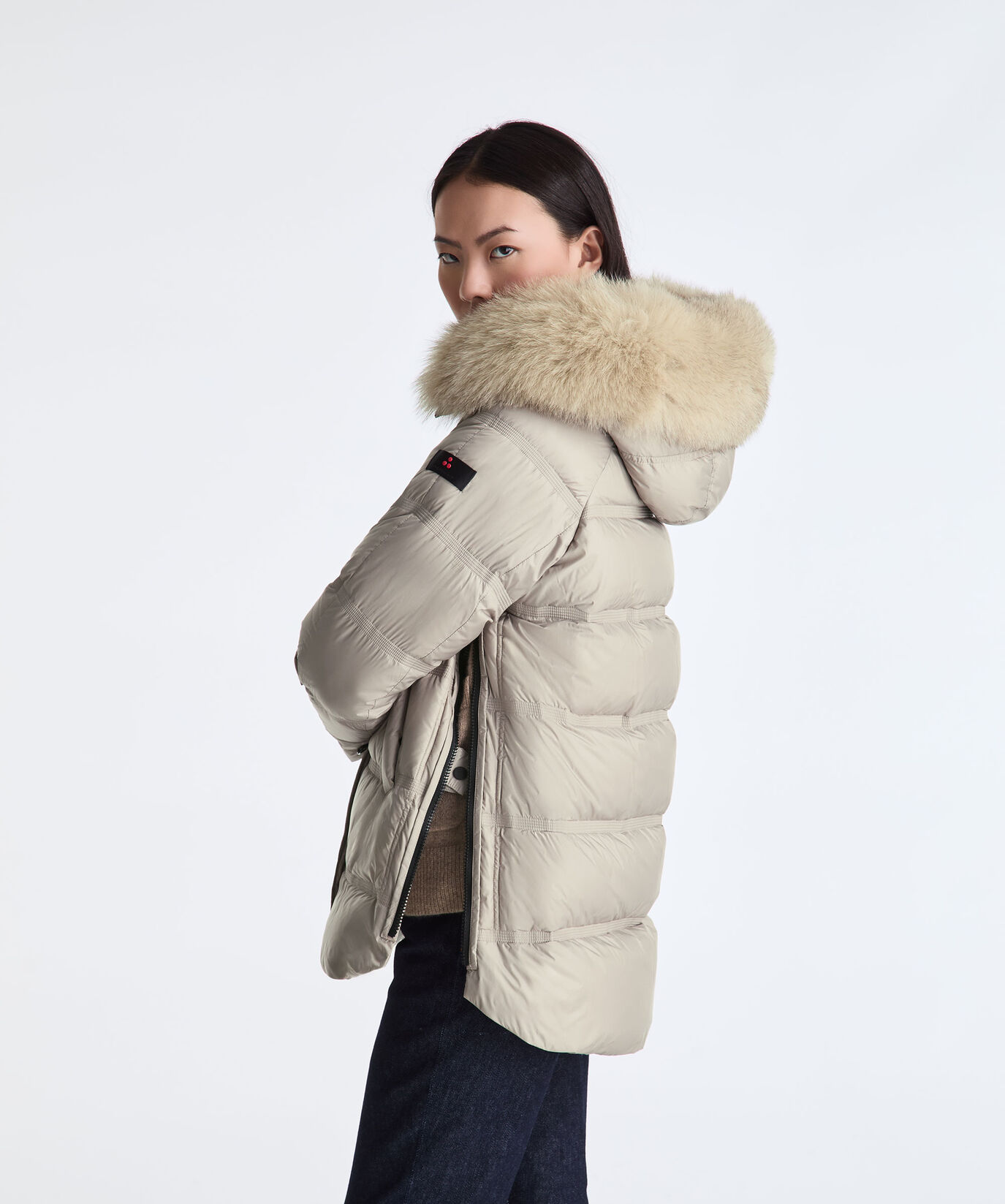
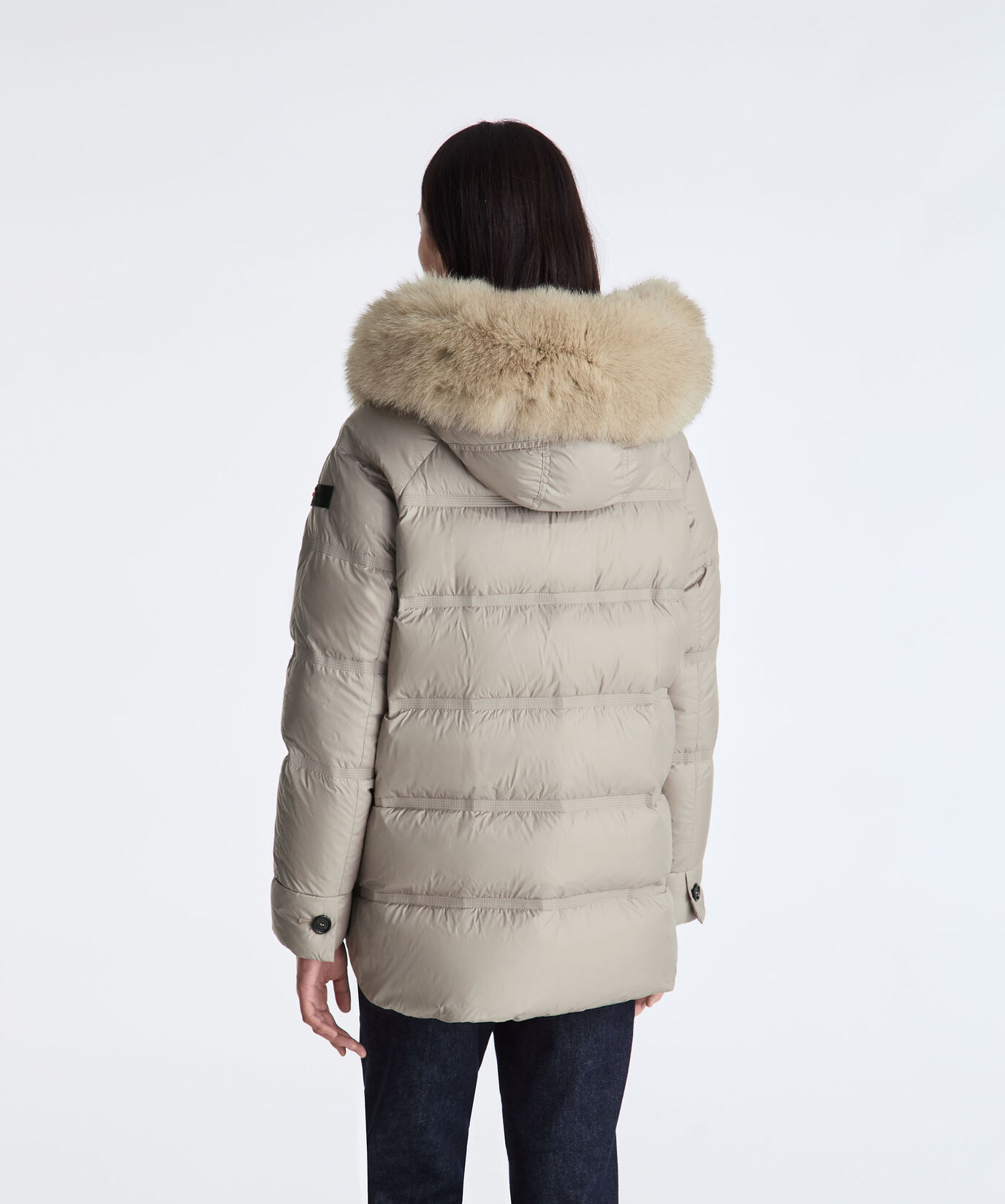
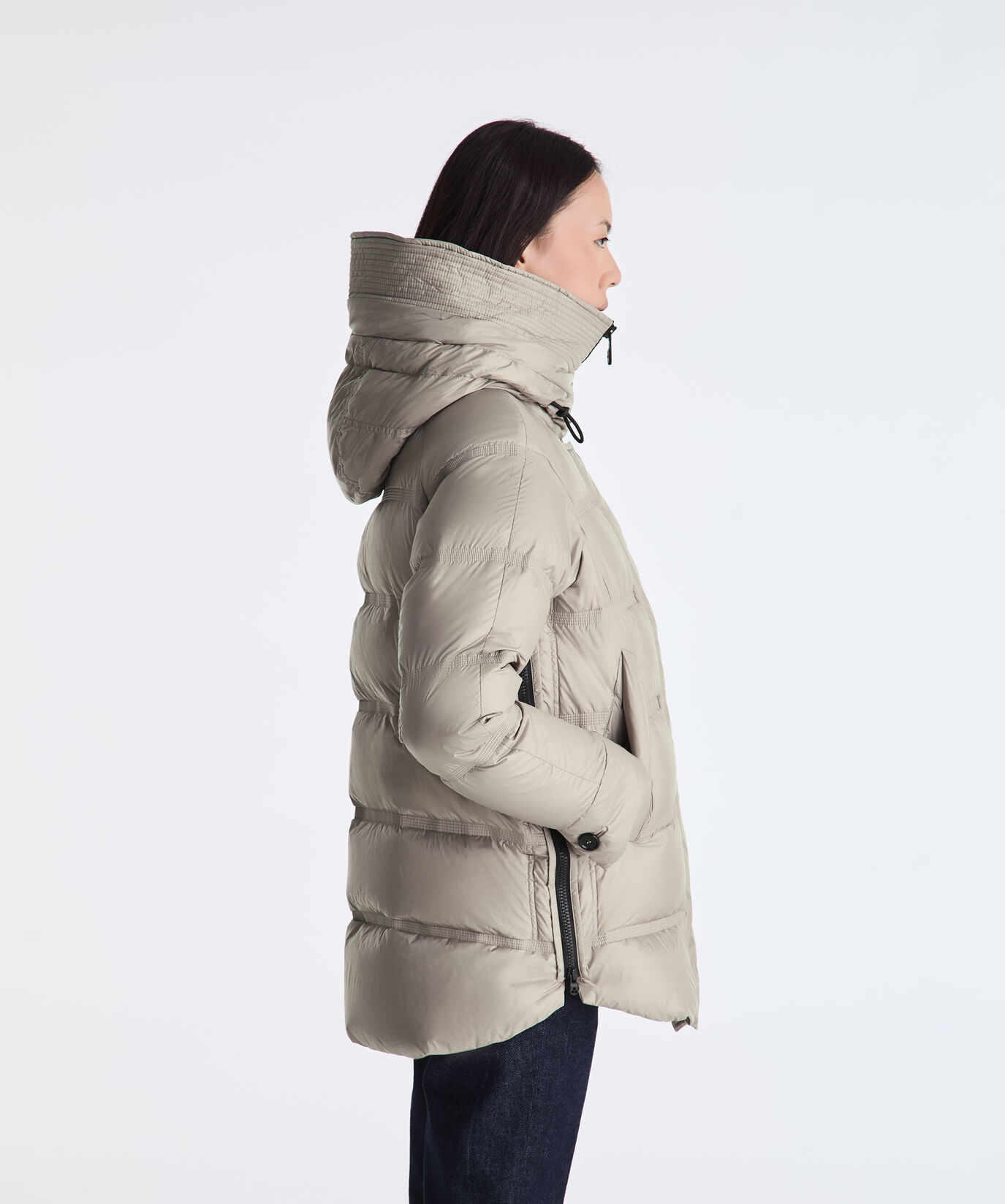
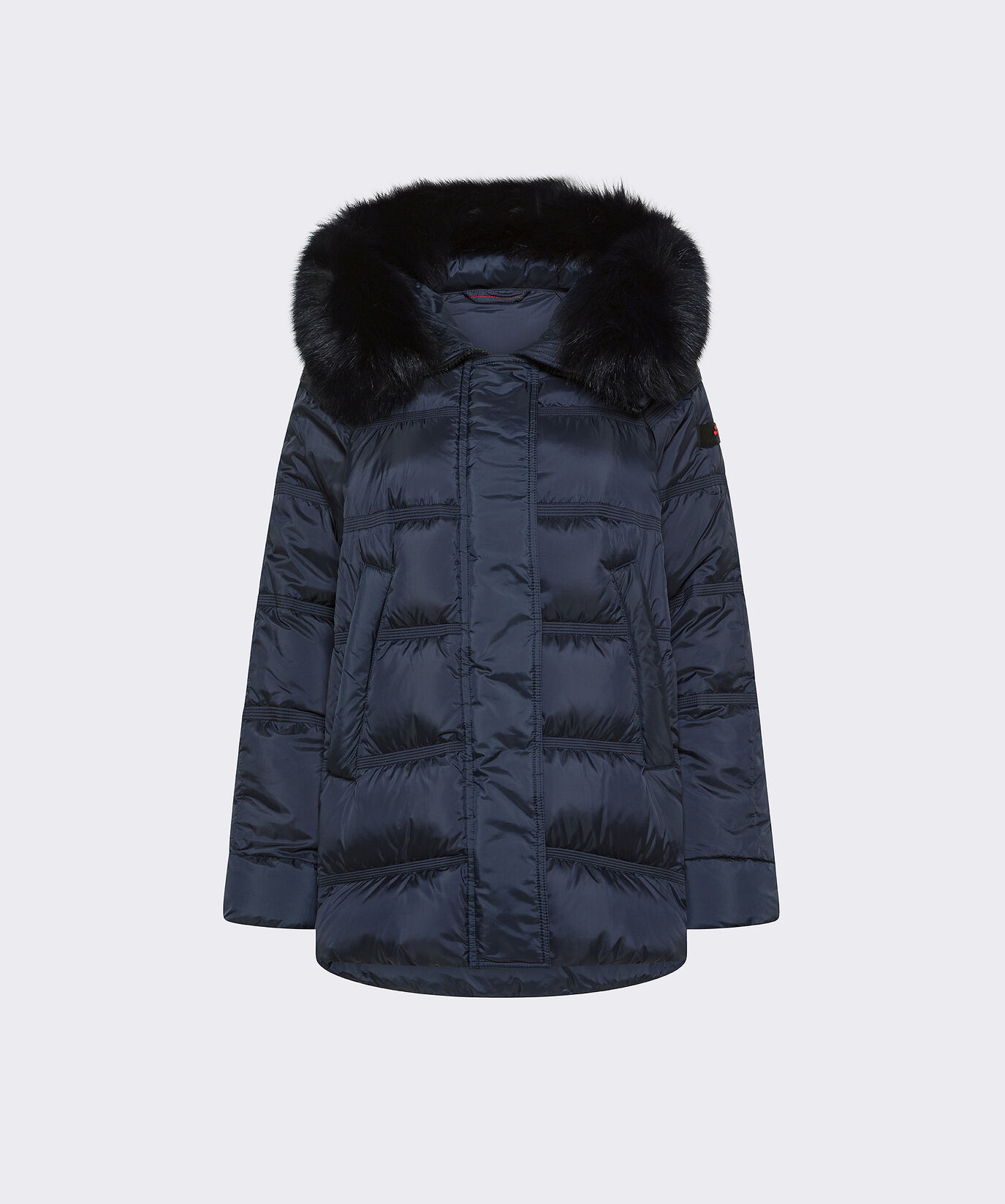
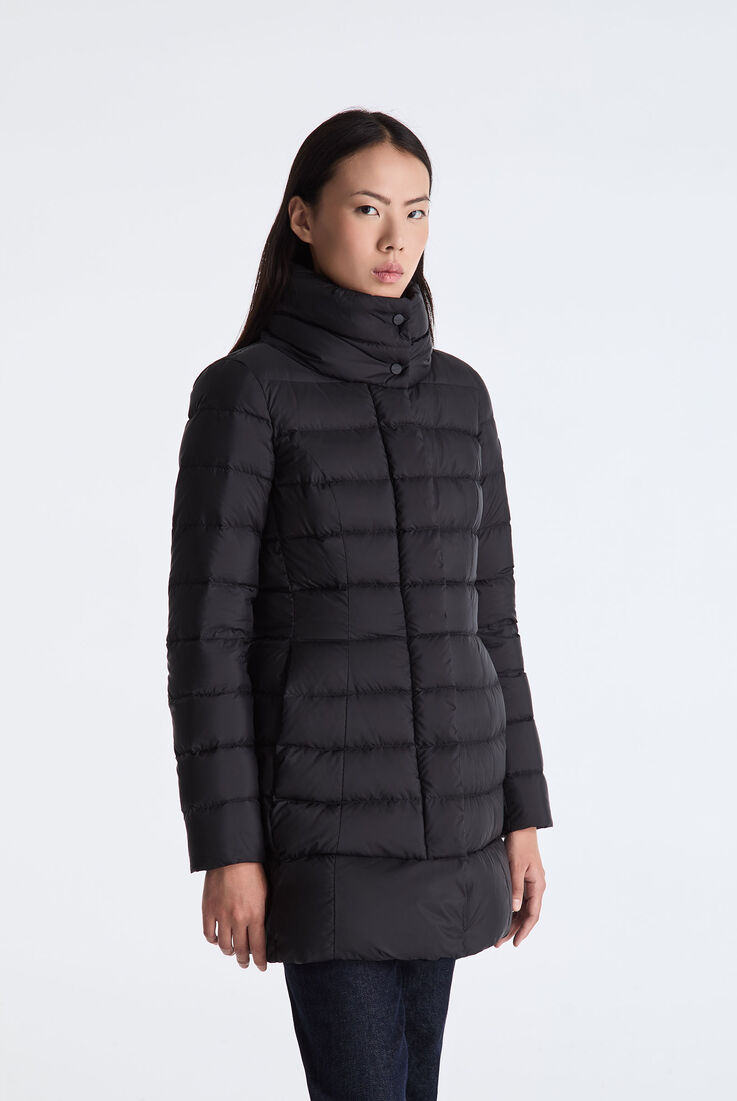
When temperatures drop, choosing outerwear that delivers genuine warmth becomes an essential part of winter dressing. A women's winter down jacket meets this need by combining effective insulation with considered design, making it equally suited to everyday city commutes and longer periods outdoors. For transitional weather and milder temperatures, the women's lightweight puffer jackets collection offers a lighter option while maintaining everyday thermal comfort.
The type of insulation influences not only how effectively a women's puffer winter jacket retains warmth, but also its weight and overall volume. Natural down is valued for its excellent warmth-to-weight ratio: its structure traps pockets of air, creating an insulating layer without requiring excessive bulk. Synthetic insulation relies instead on technical fibres engineered to retain heat and can work particularly well in relatively streamlined constructions. Hybrid designs offer another possibility, combining different materials or varying the fill across specific areas of the jacket to balance warmth, comfort and freedom of movement.
Composition is only part of the equation. The amount and distribution of insulation, the construction of the quilted sections and the overall coverage of the garment all contribute to its thermal performance. For predominantly urban use, a less bulky women's padded jacket can be easier to manage when moving between outdoors and heated interiors. For long periods outside or particularly cold conditions, a warmer design with more substantial insulation and greater coverage is generally the better choice.
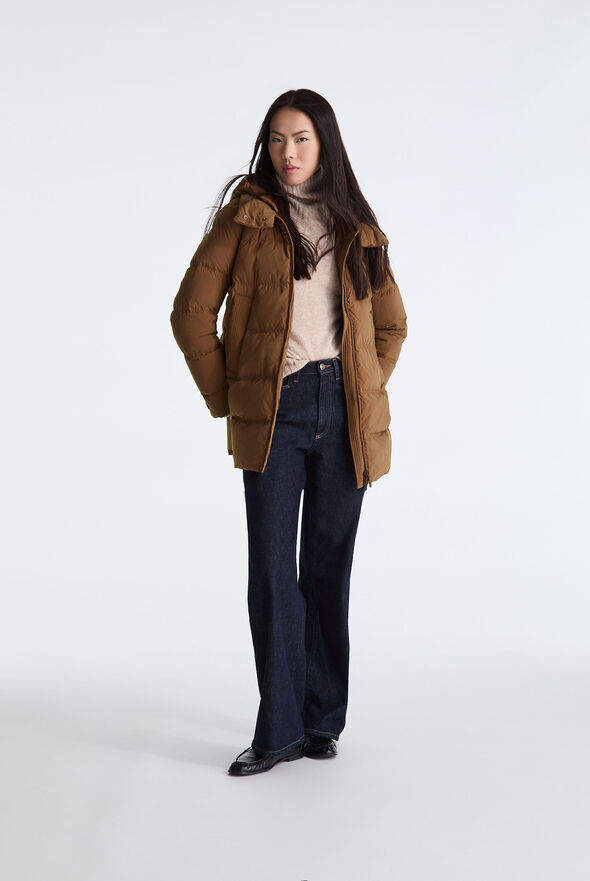
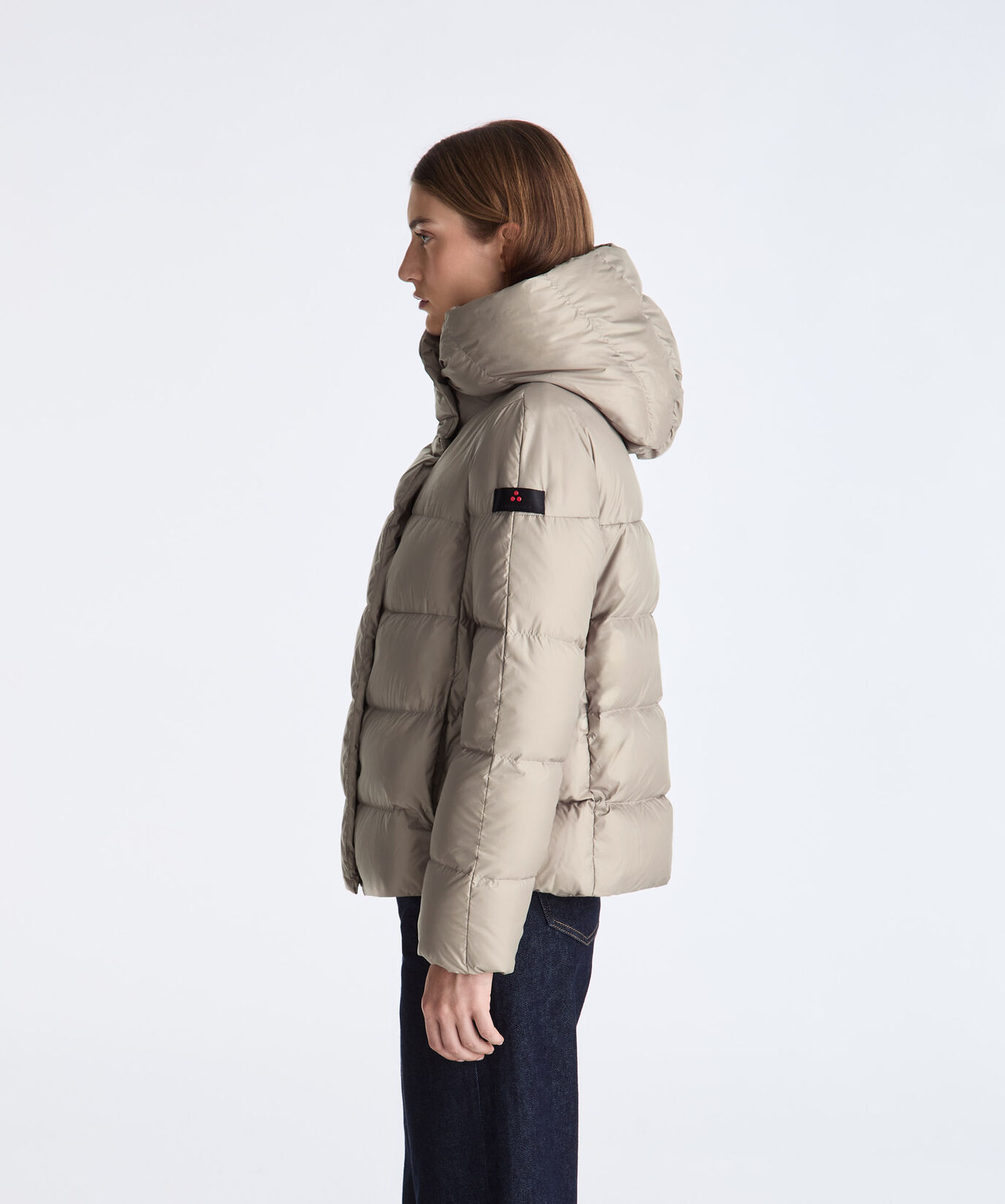
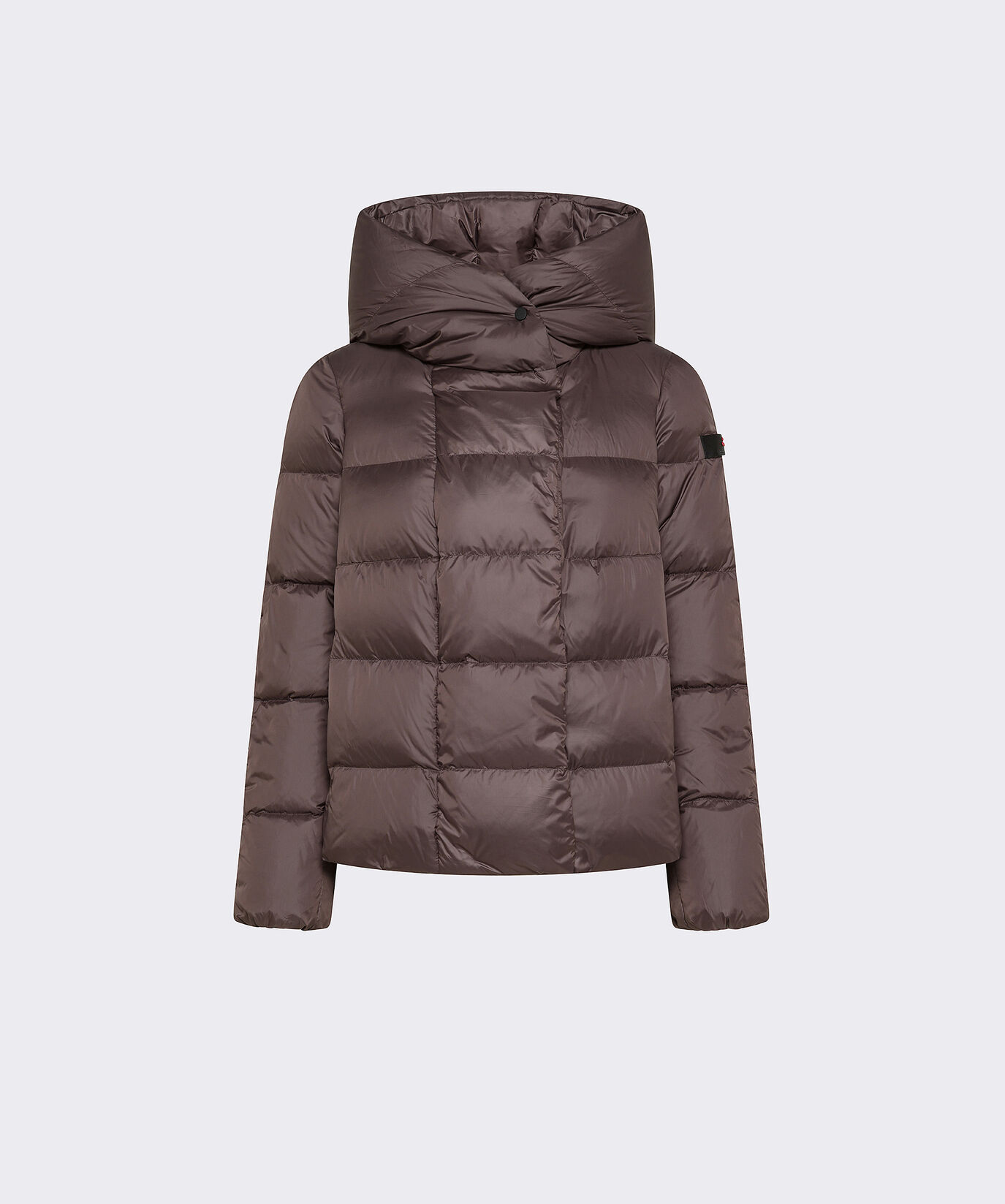
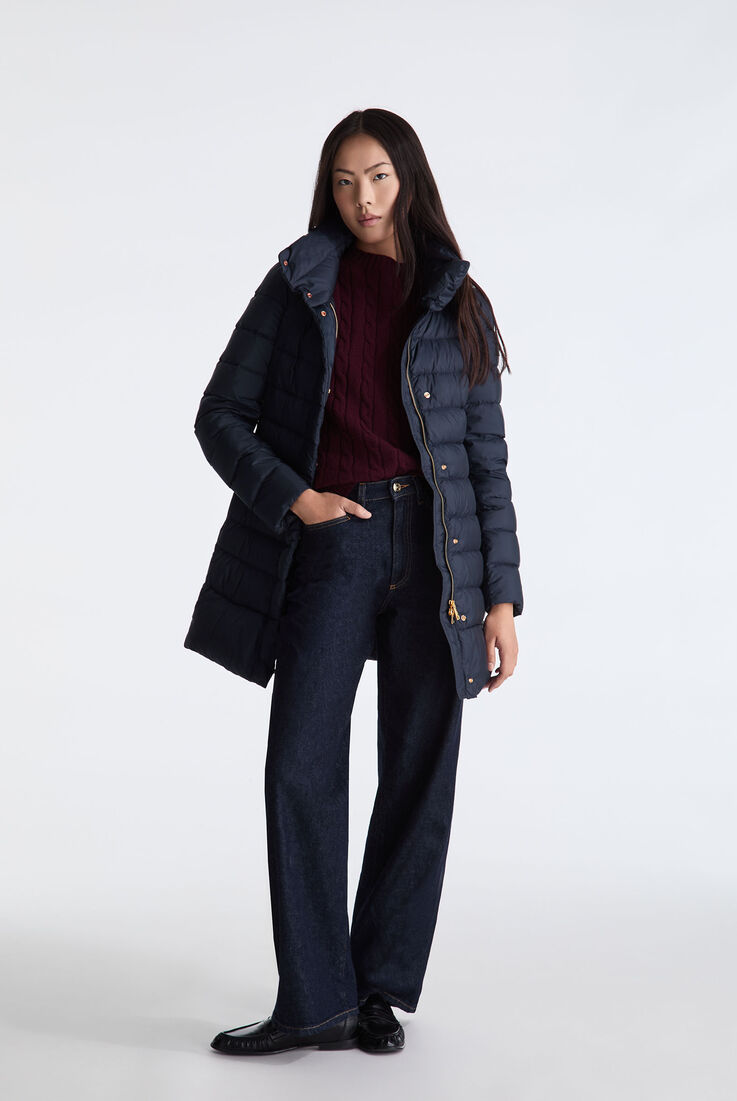
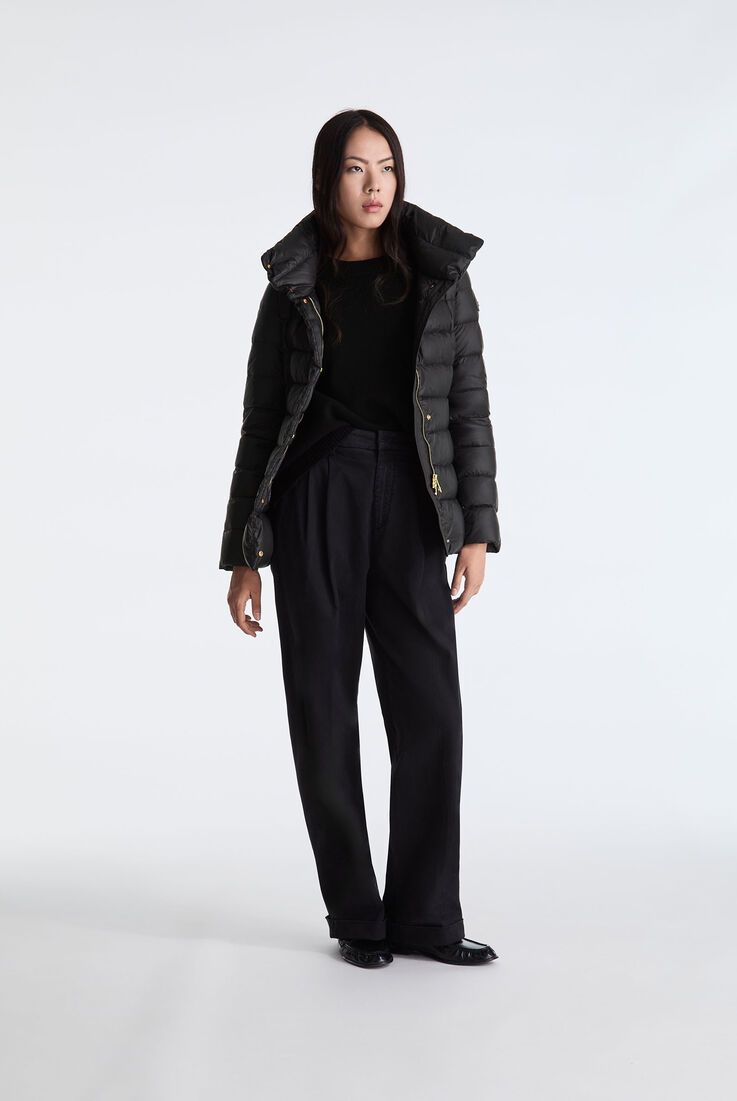
Length has a noticeable impact on both warmth and practicality. A short puffer that finishes around the hips or just below the waist gives greater freedom of movement, making it a practical option for driving, commuting and busy days in the city. Mid-length styles offer a useful balance, extending coverage without the proportions of a full-length coat. A longer women's puffer coat, meanwhile, protects more of the body and comes into its own on colder days or whenever more time is spent outdoors. To compare puffer jackets with other styles for different winter conditions, the Peuterey women's outerwear collection brings together a variety of lengths, constructions and designs for different needs.
Fit can completely change the appearance and feel of a winter puffer, even when length and insulation are similar. A fitted design follows the body's lines for a more defined silhouette, while a regular fit provides additional room for knitwear and winter layers without creating unnecessary bulk. Relaxed and oversized shapes lend themselves naturally to layering and create softer proportions, while A-line styles are neater through the upper body before widening towards the hem, allowing more room around the hips. Depending on the design, belts, drawcords and adjustable waists can further shape the garment and allow its proportions to be adapted to different outfits.
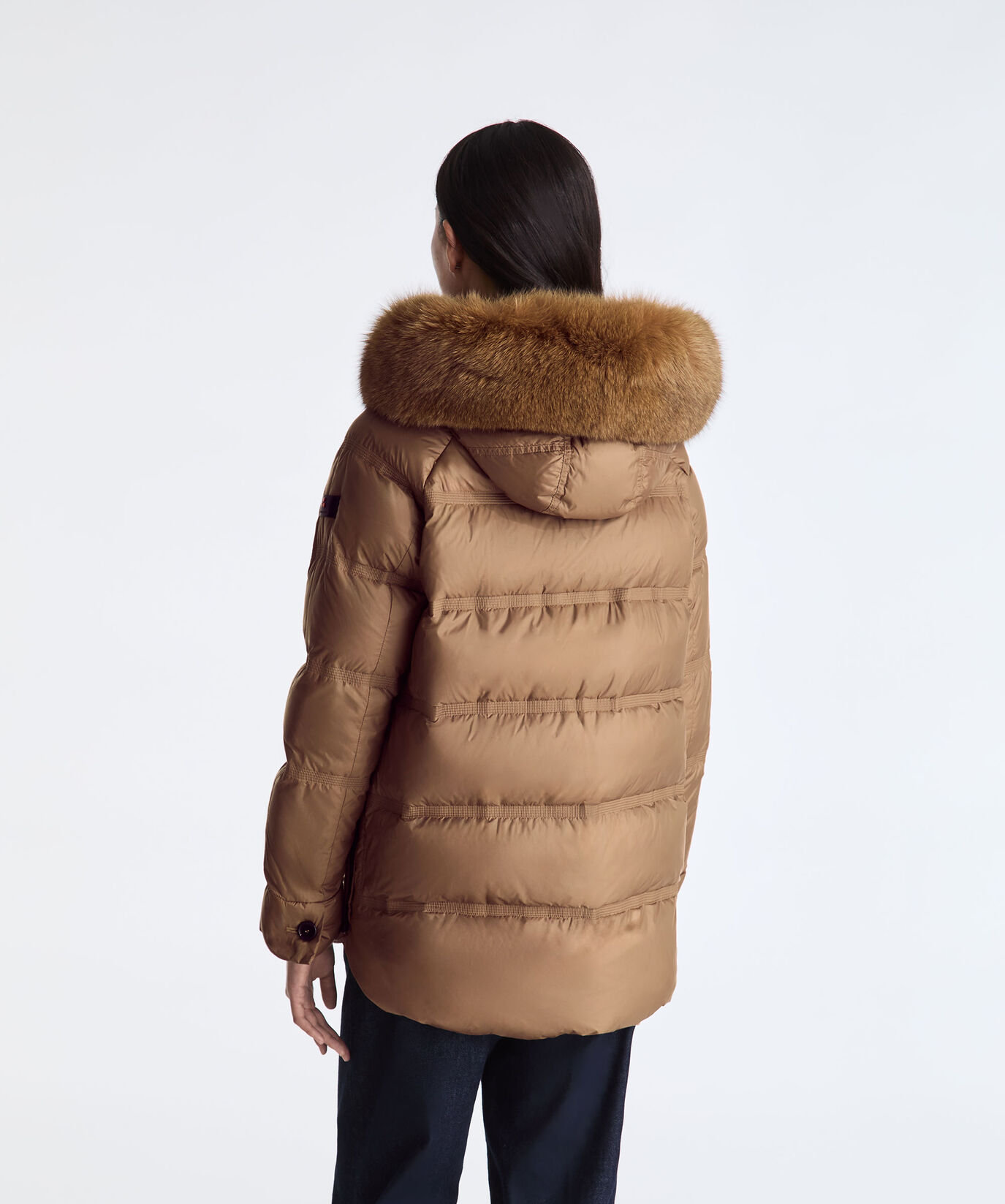
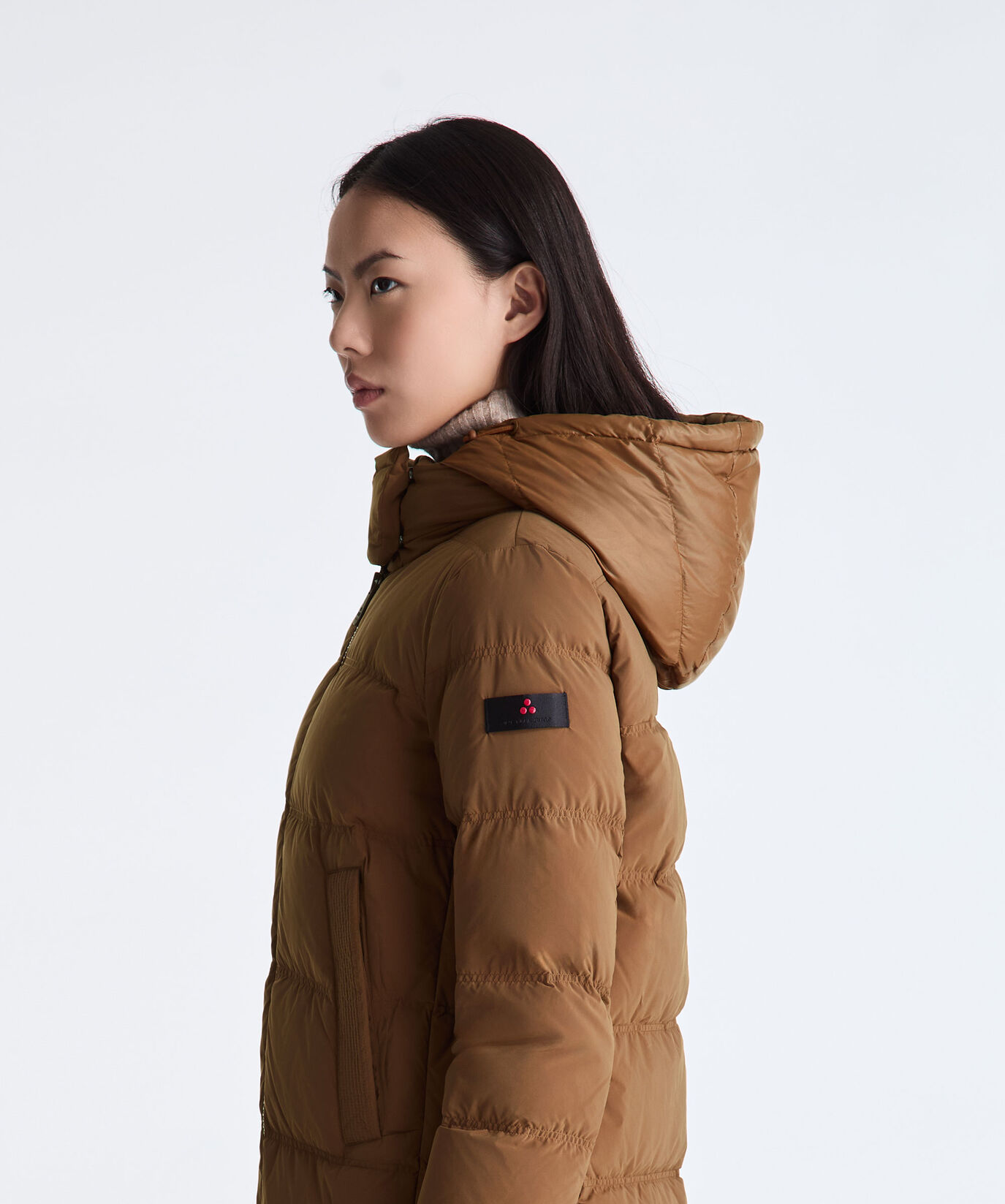
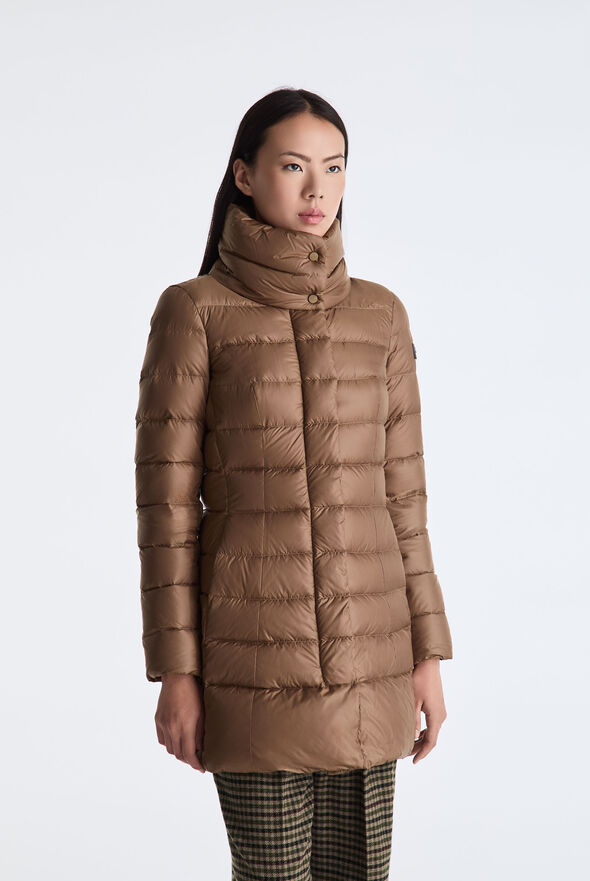
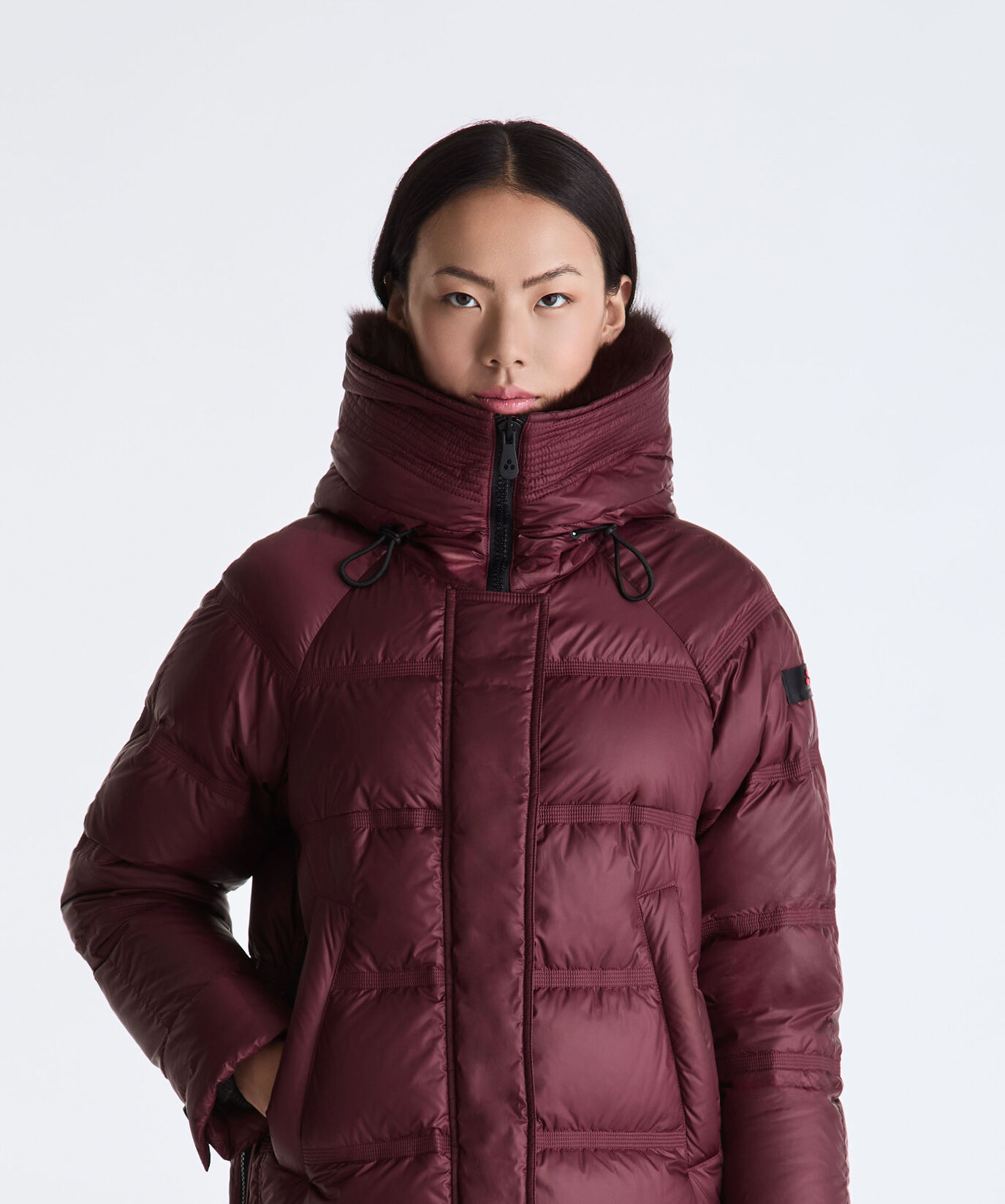
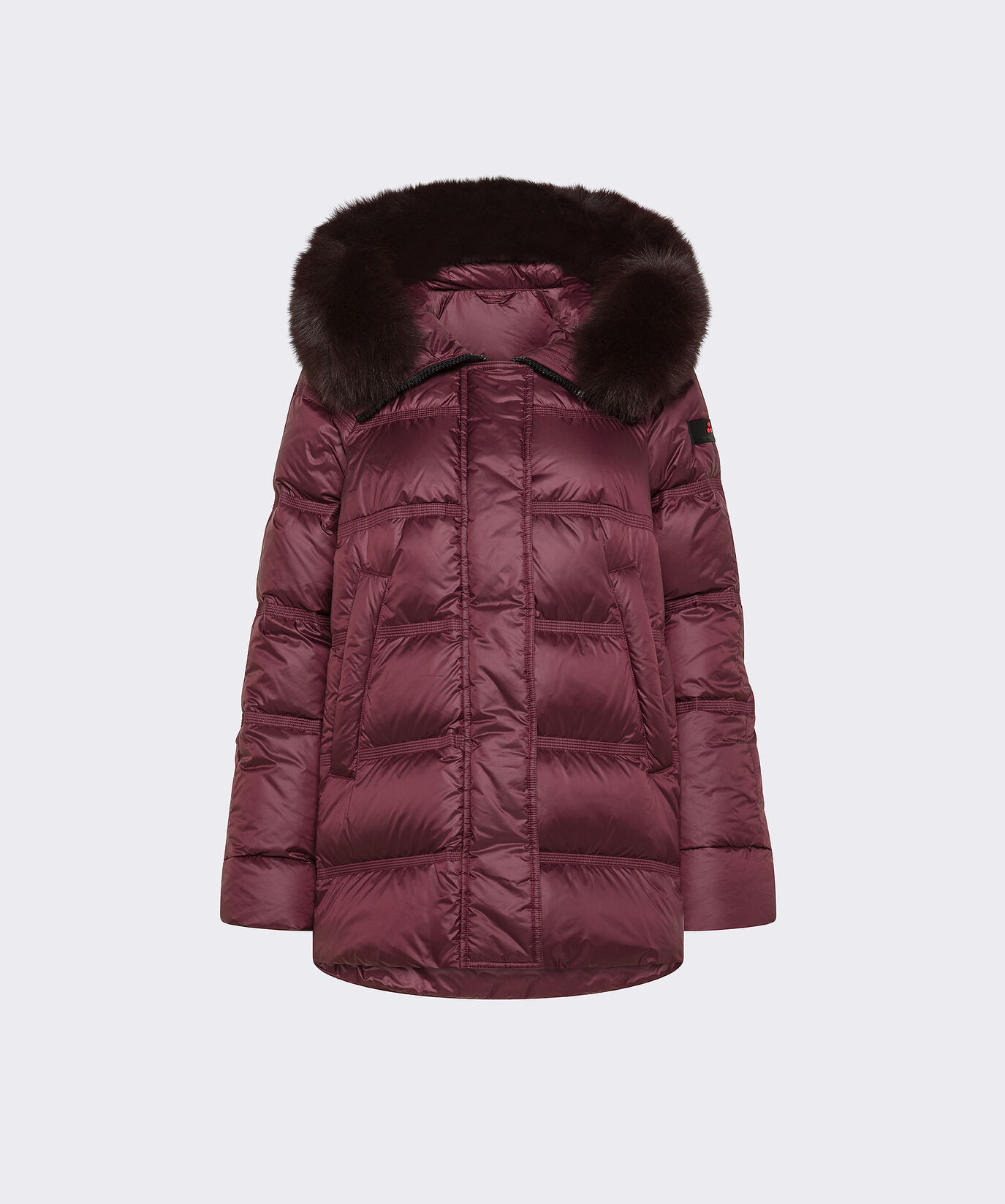
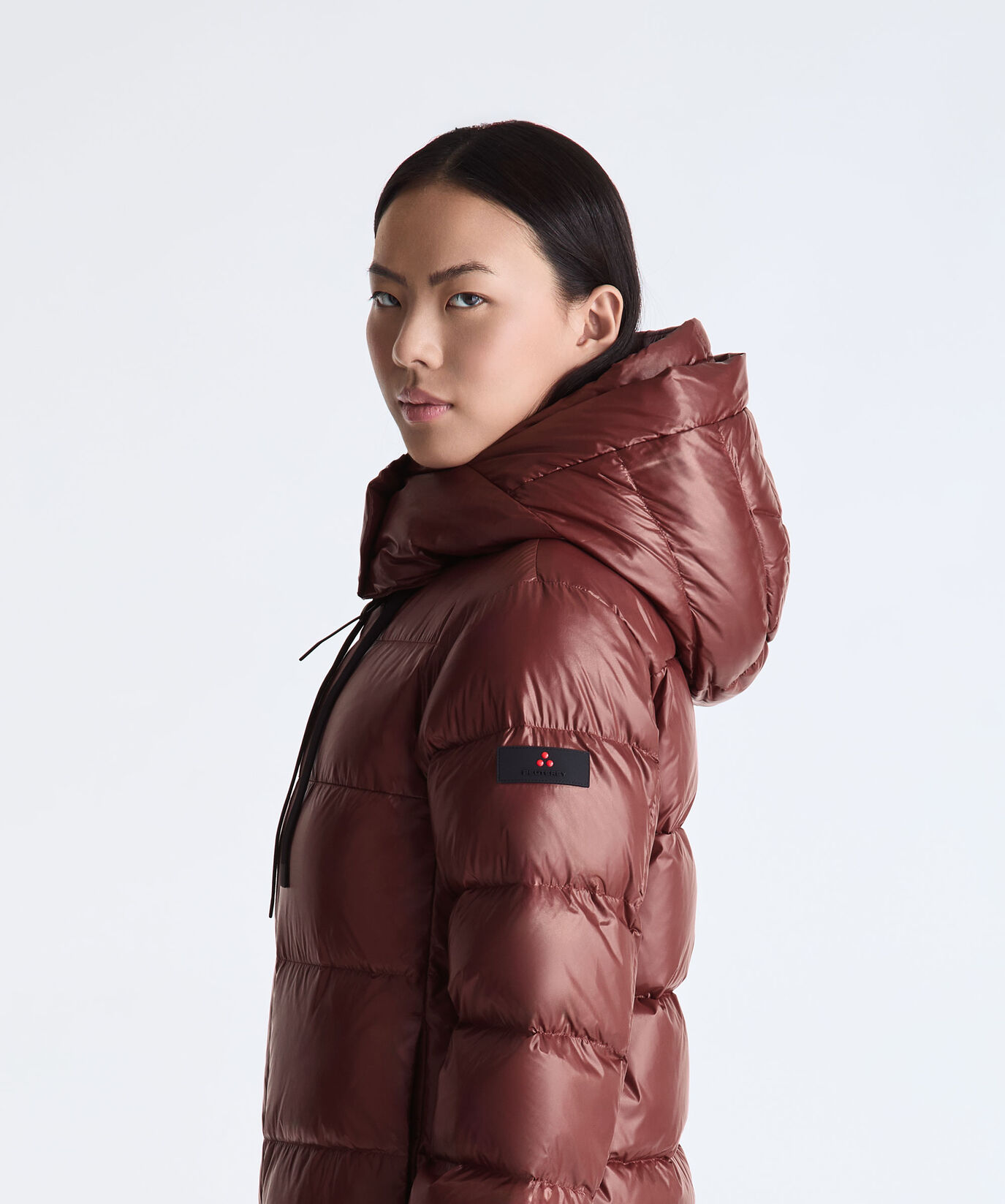
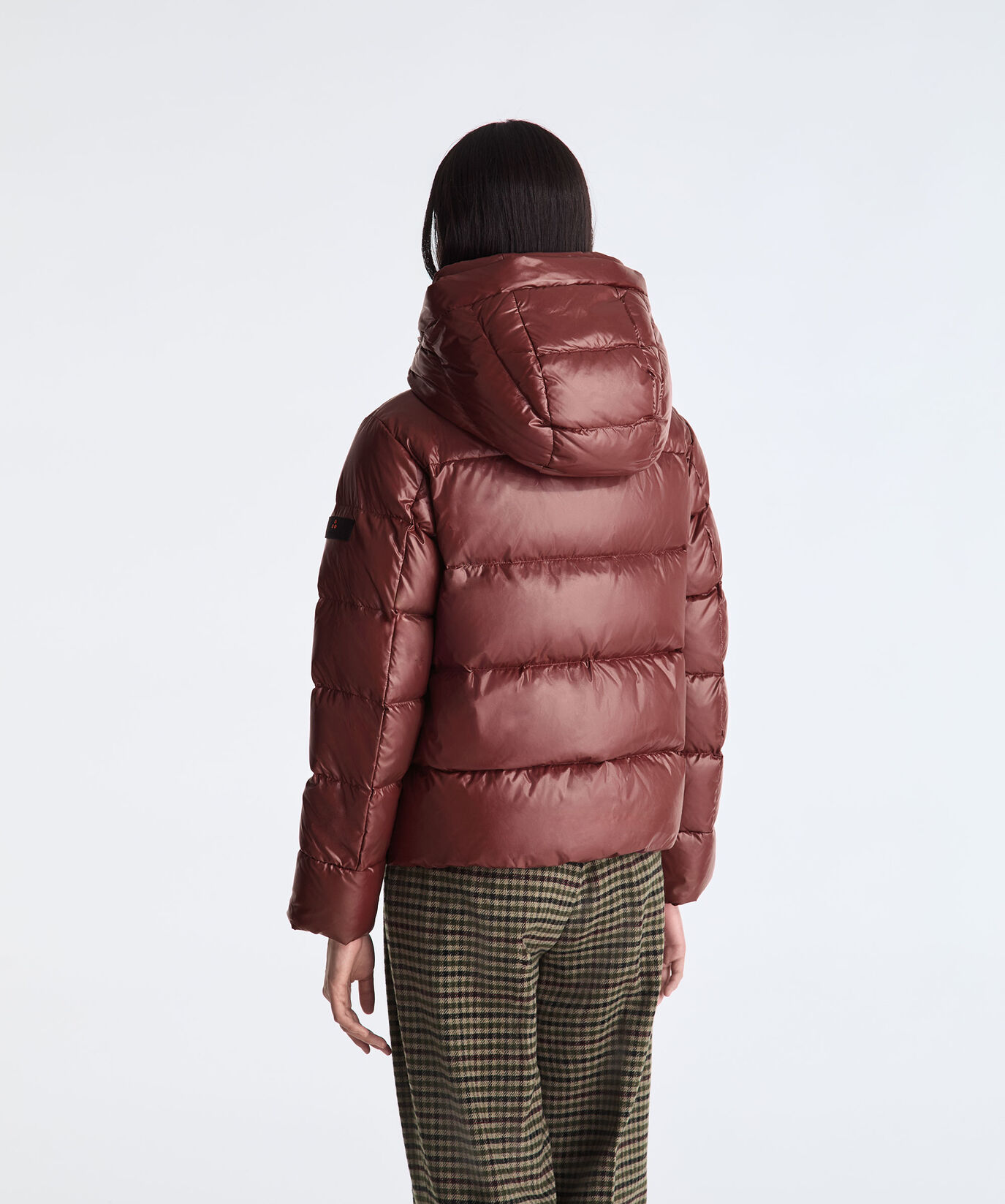
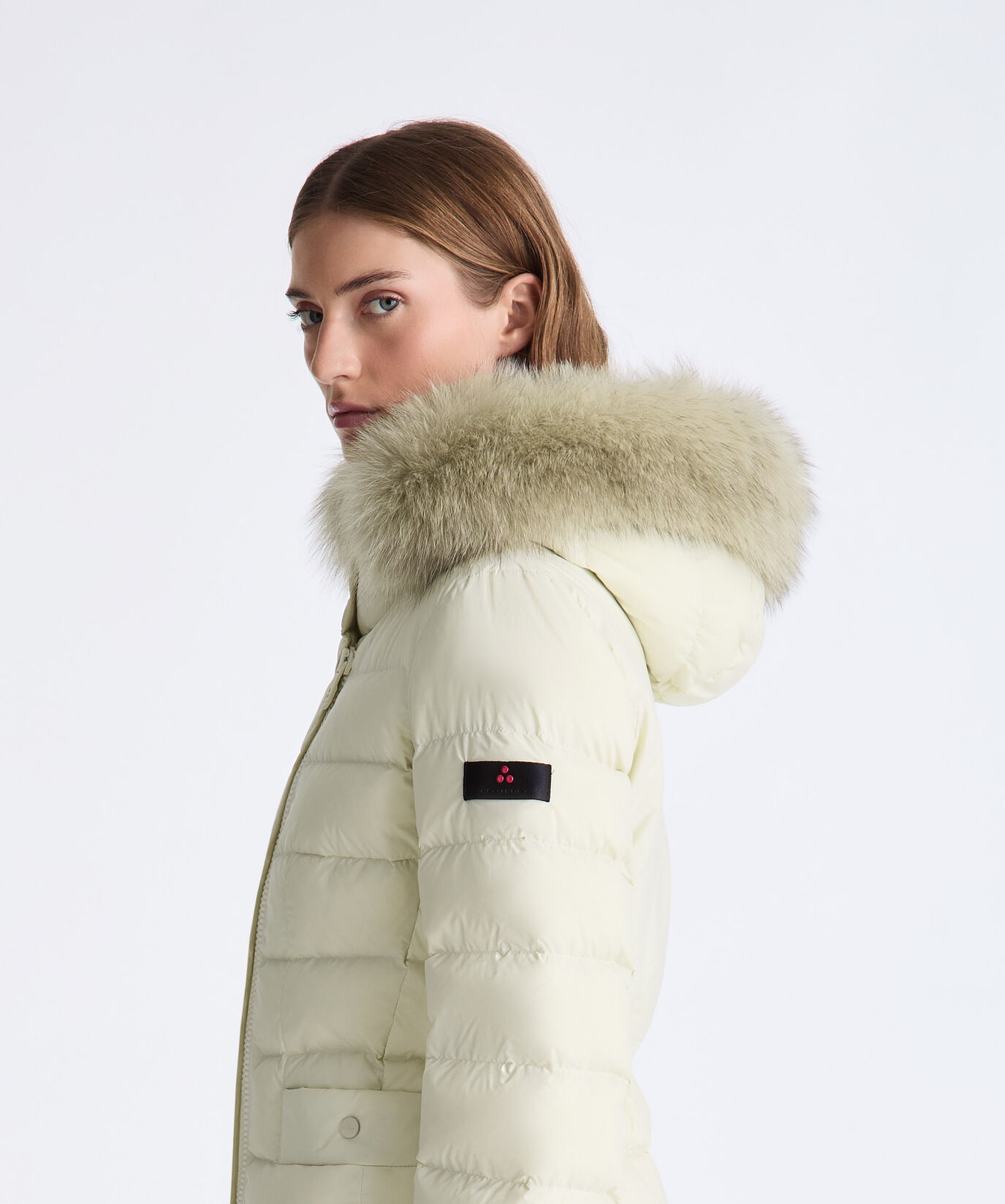
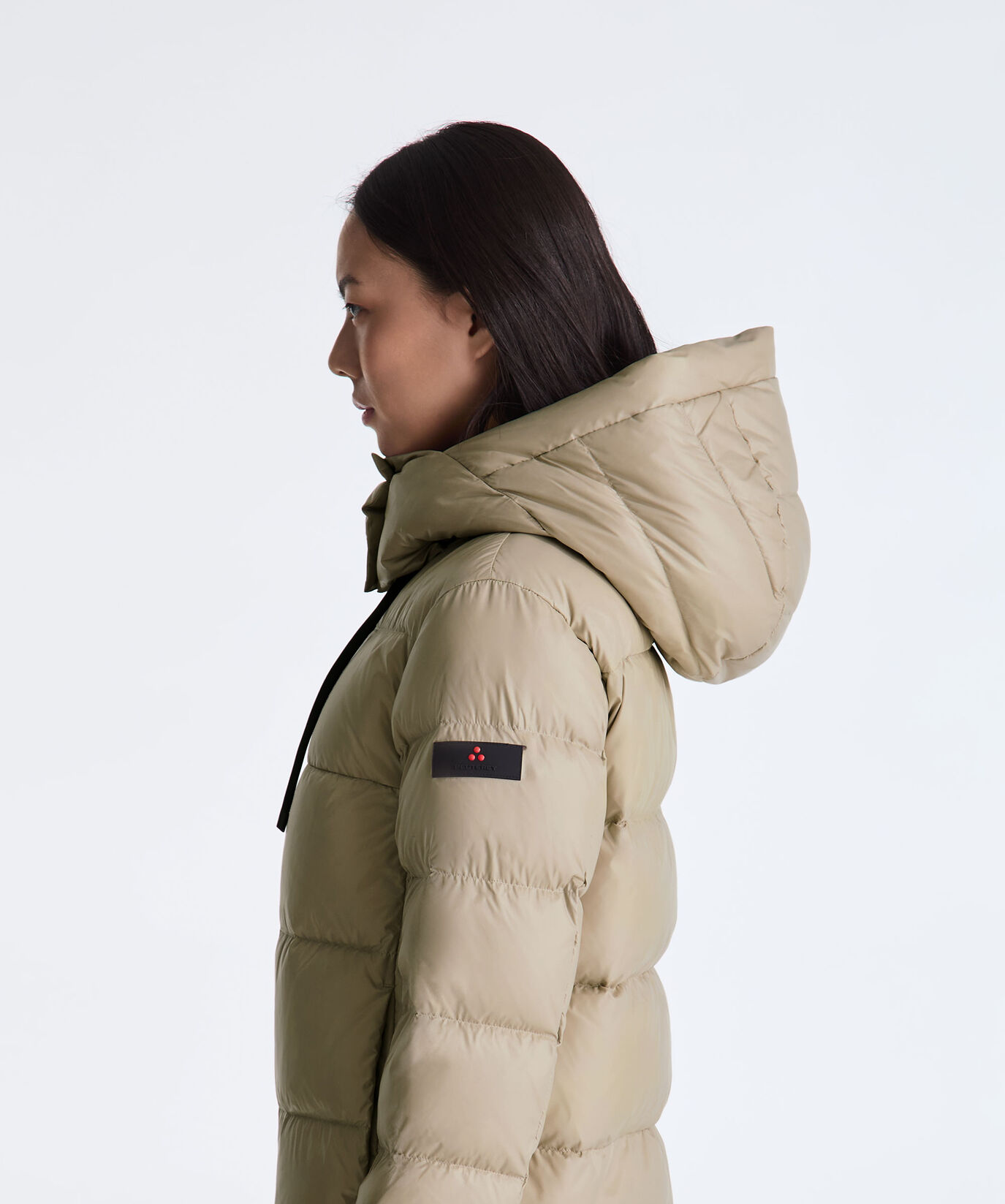
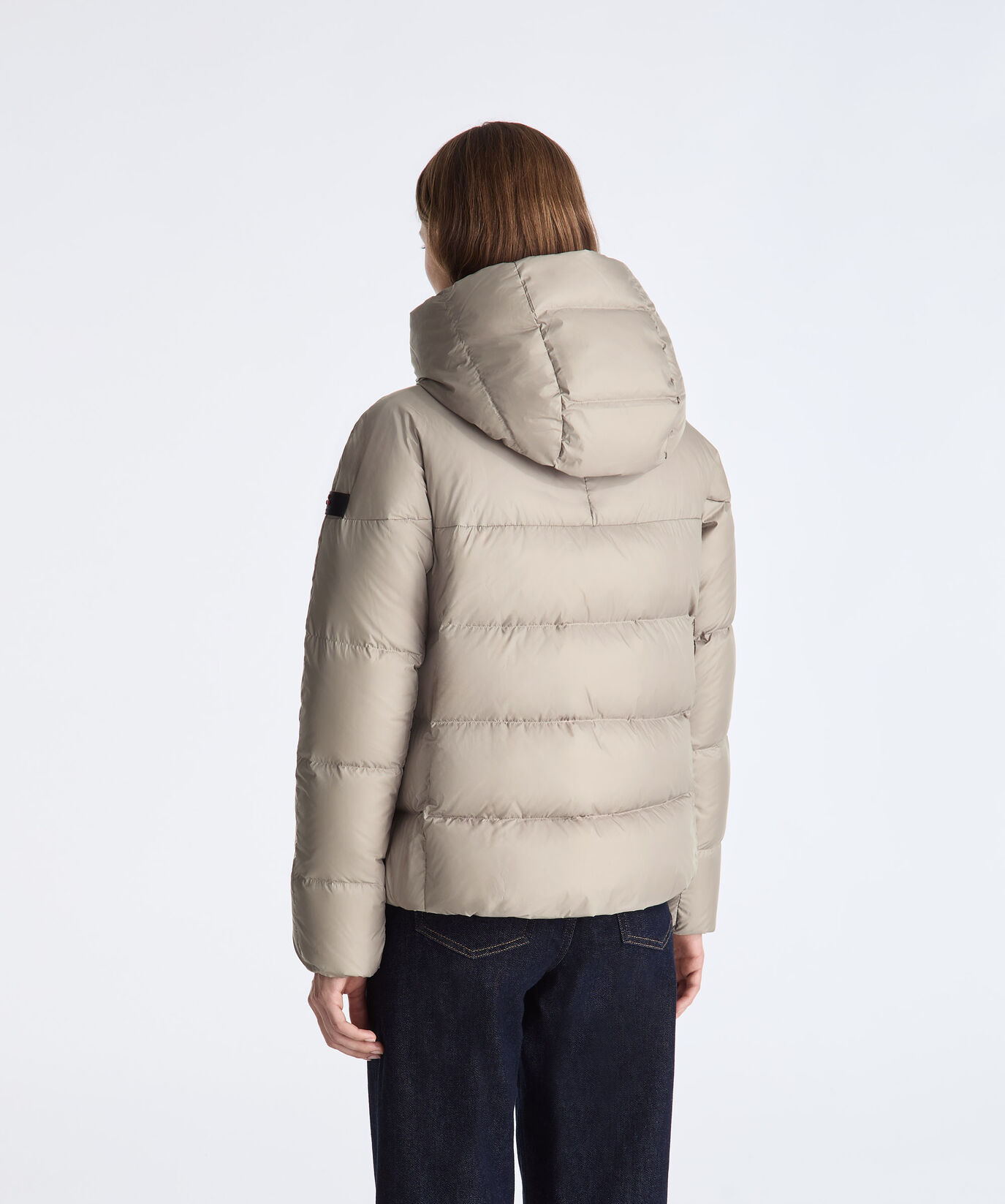
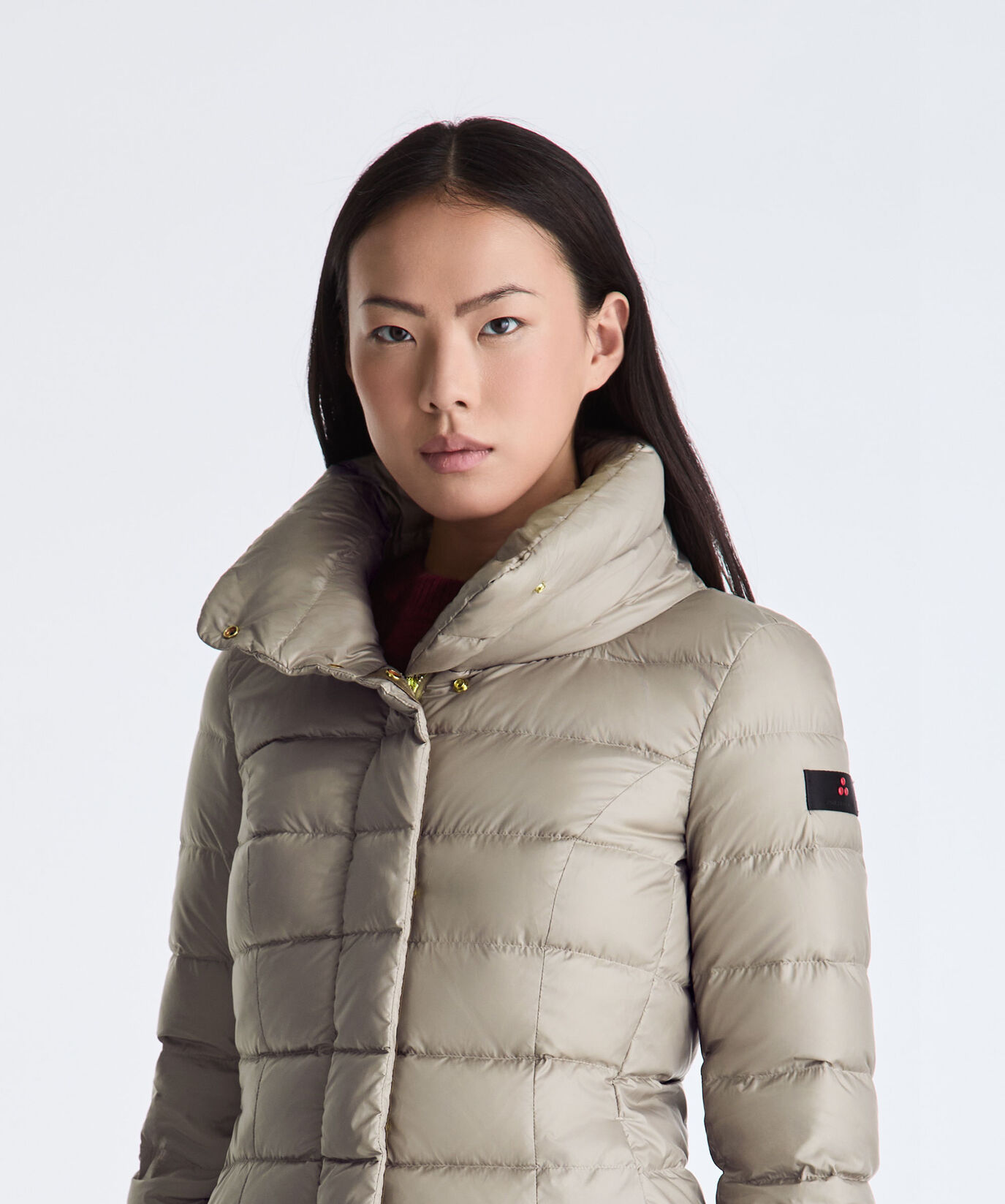
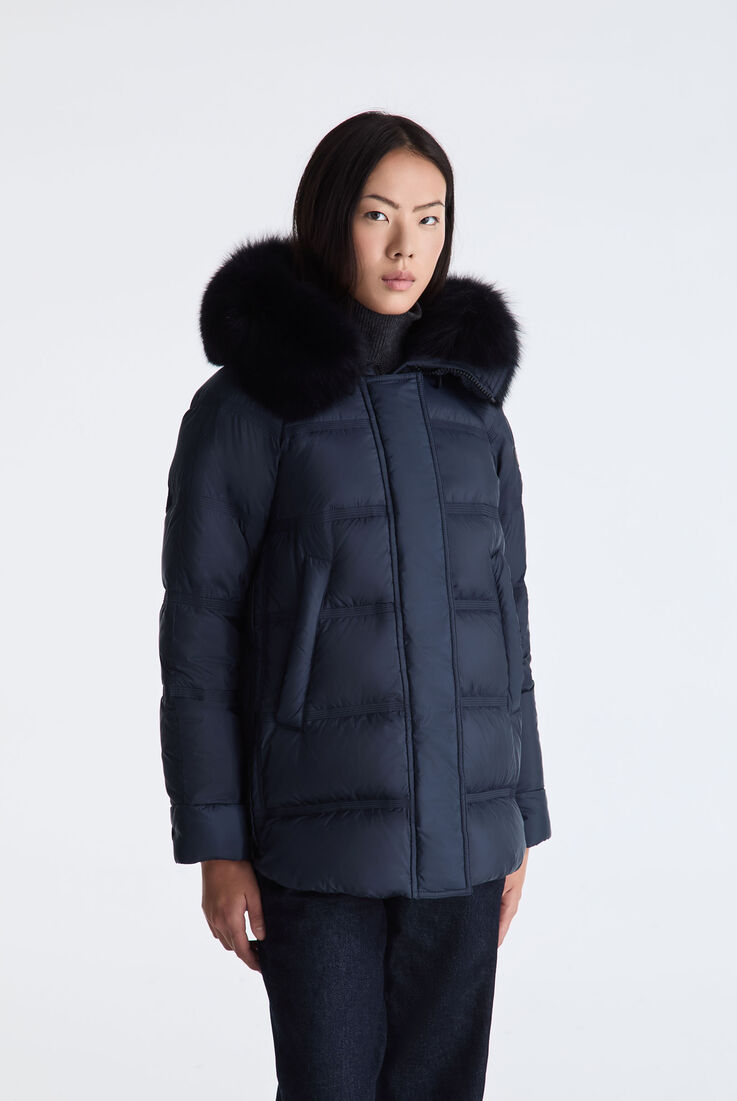
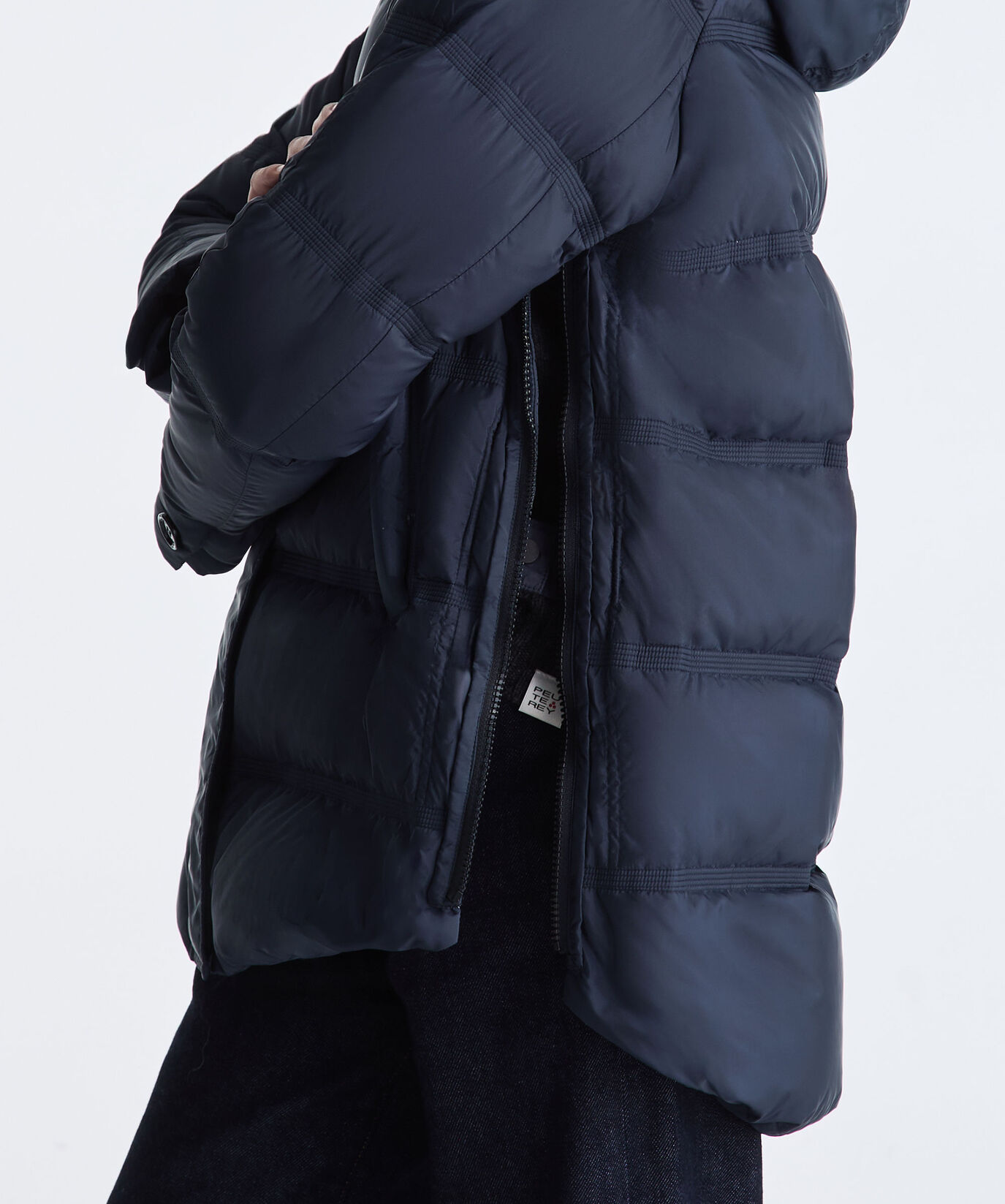
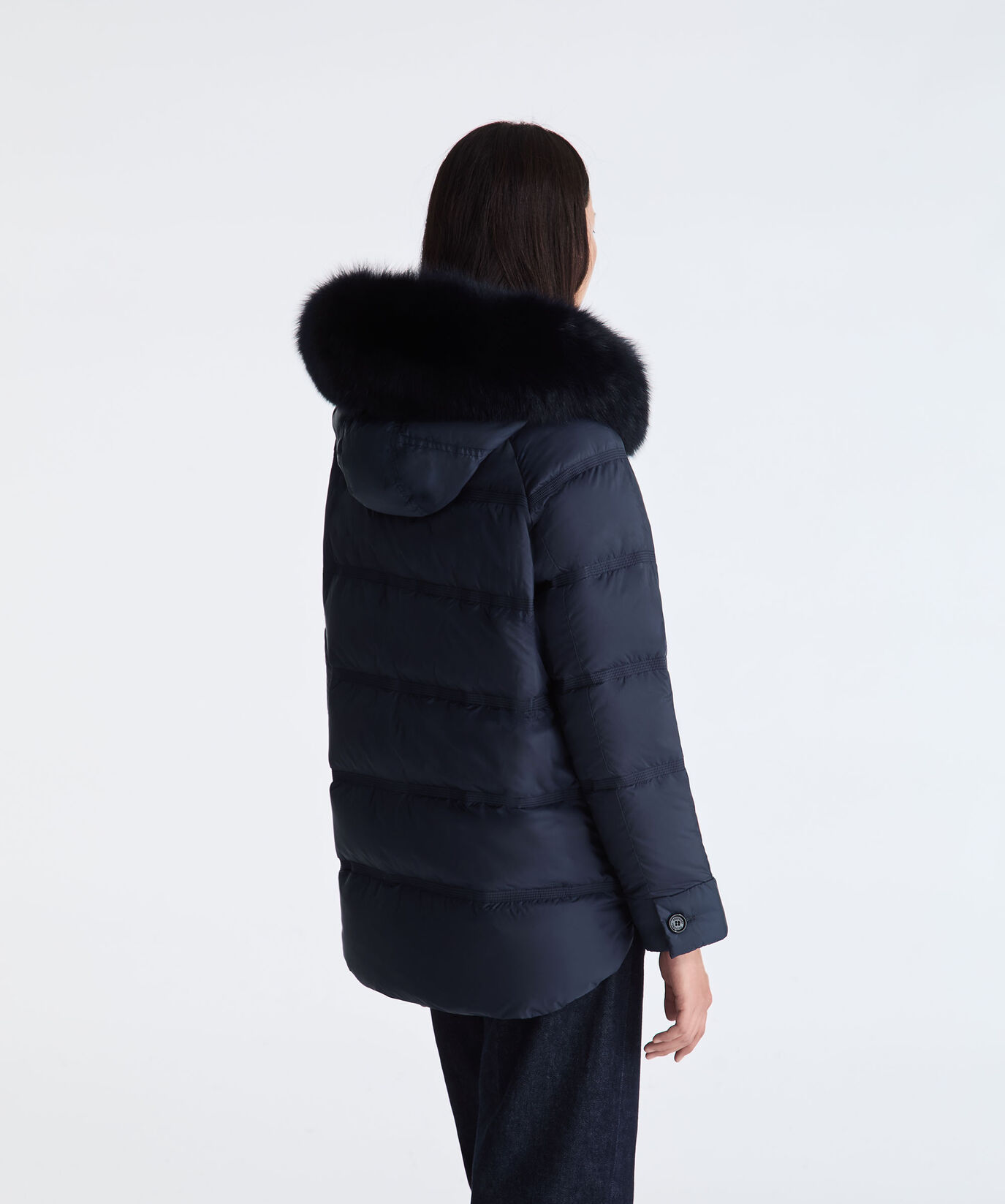
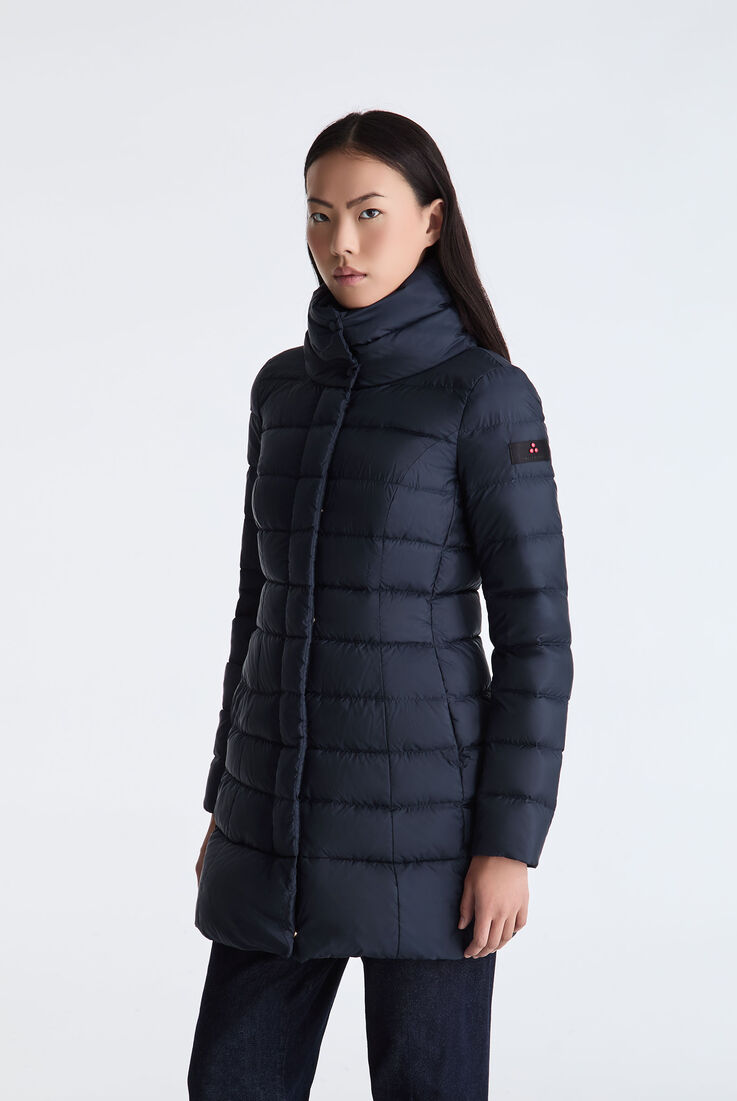
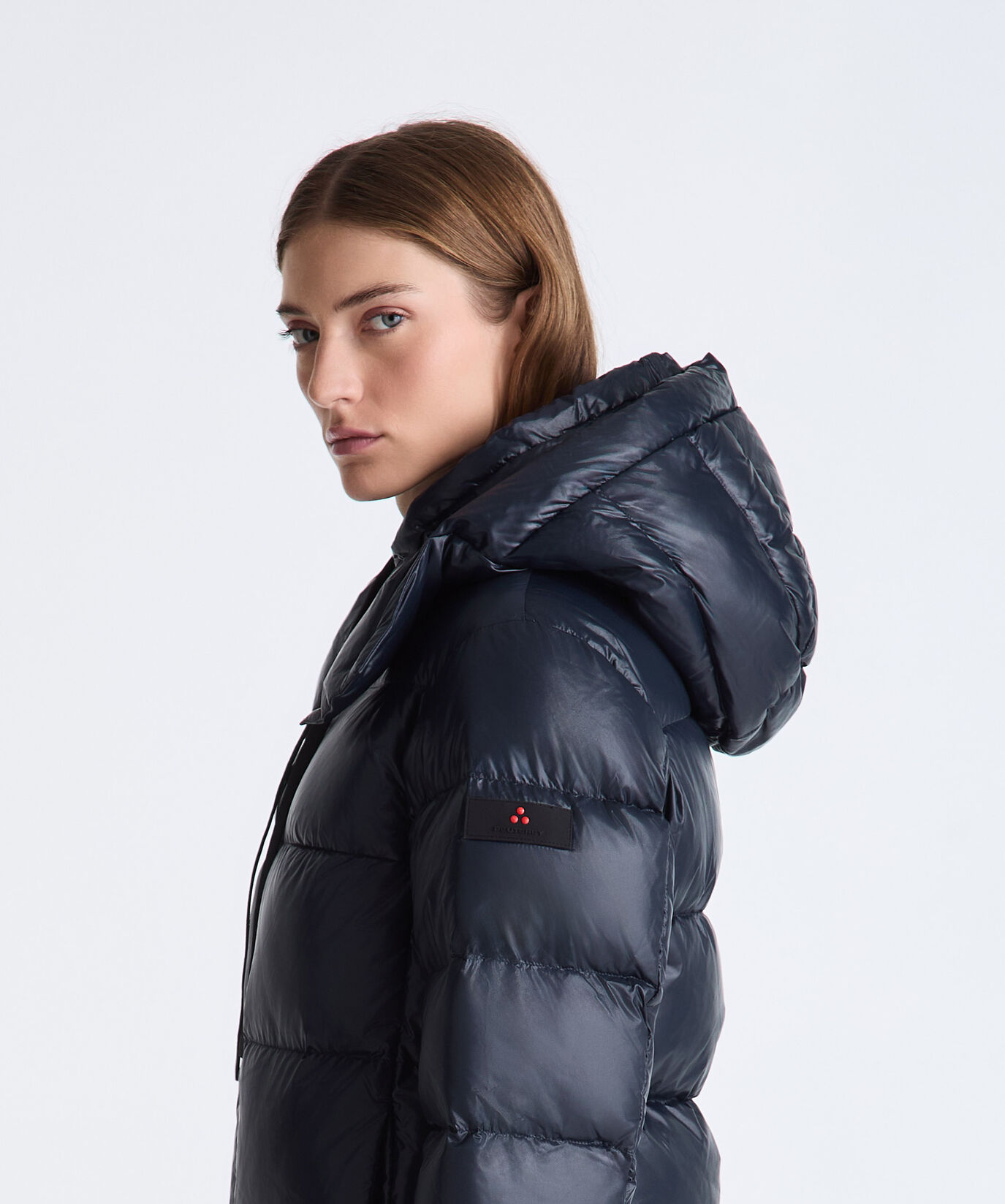
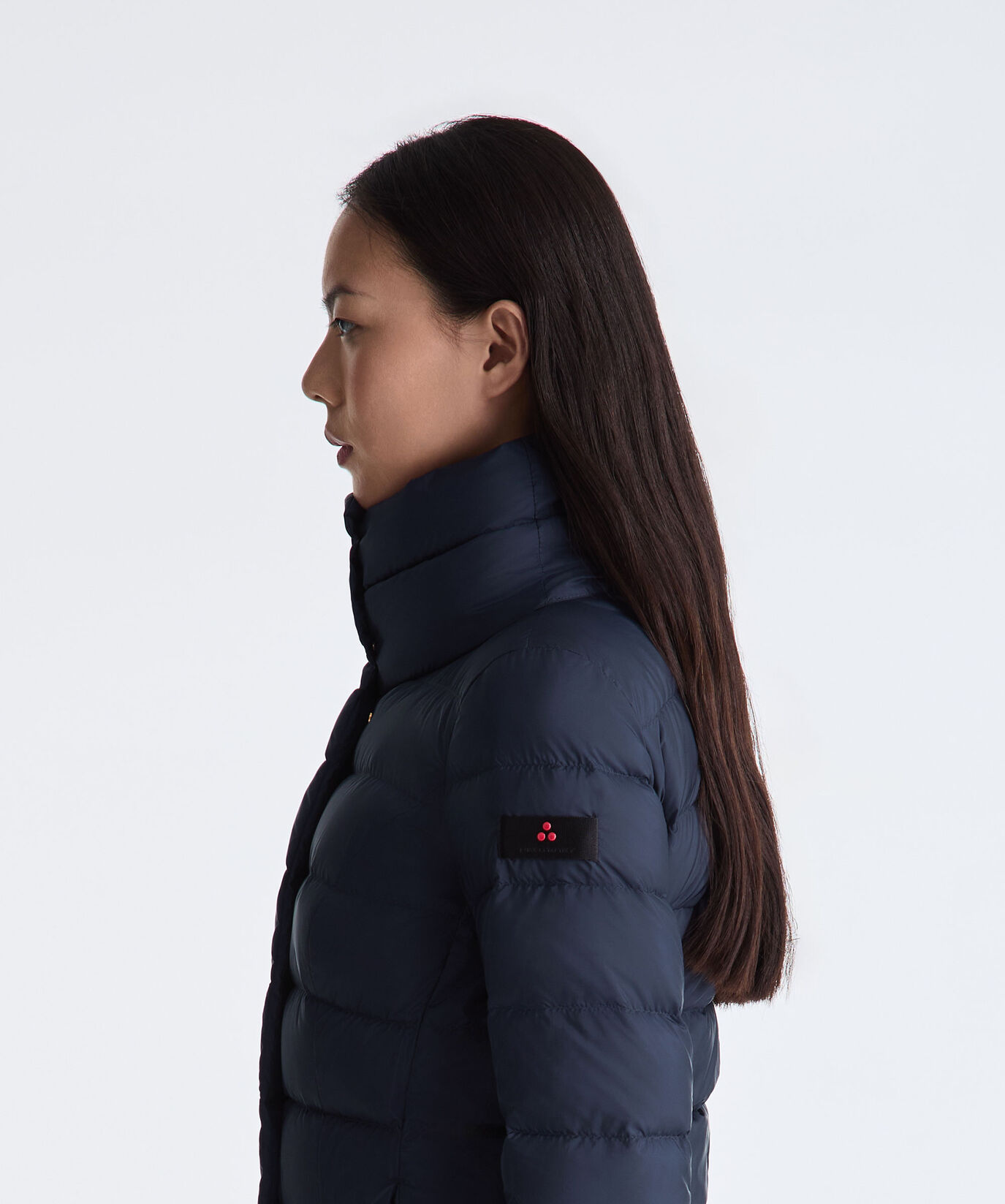
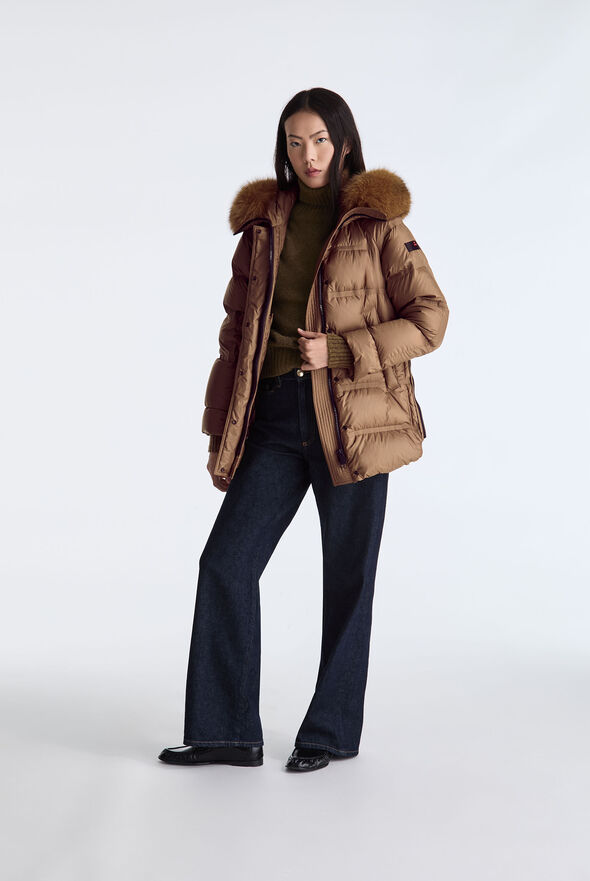
Insulation is not the only factor that matters when temperatures fall. A women's hooded down jacket provides additional coverage around the head and neck, while a high collar can help keep cold air out even on hoodless designs. Protected zips, close-fitting cuffs and adjustable hems, where featured, can further limit heat loss and make a jacket more comfortable on windy days. For rain or snow, it is important to look at the specific properties of the outer fabric: water-repellent treatments, membranes and taped seams provide different levels of weather protection and should not be considered interchangeable. The right choice therefore depends not only on warmth, but also on the conditions the jacket is most likely to encounter.
In winter, women's parkas and coats are also worth considering as alternatives to puffer jackets, offering different materials, constructions, fits and protective features to suit the weather and individual needs.
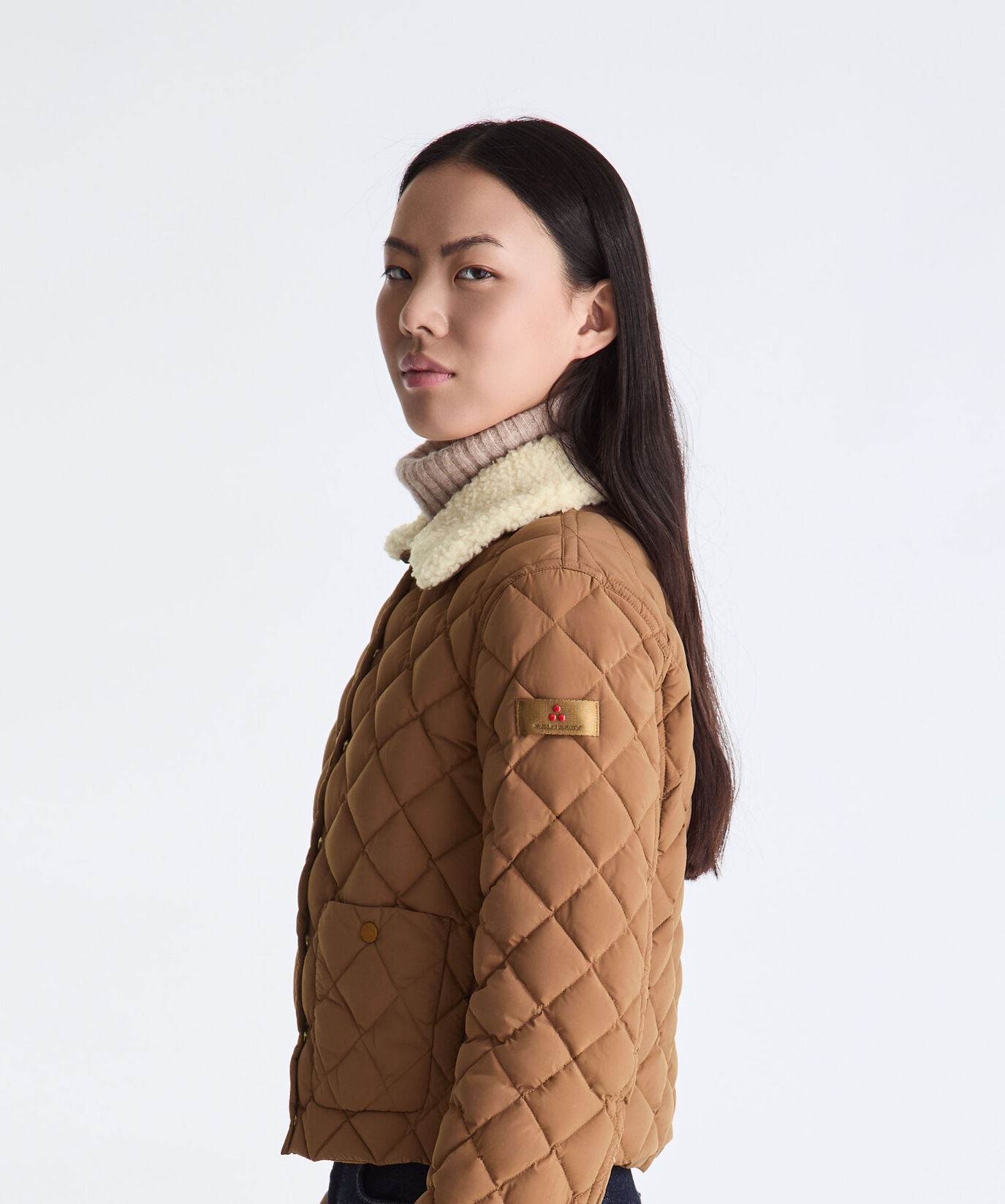
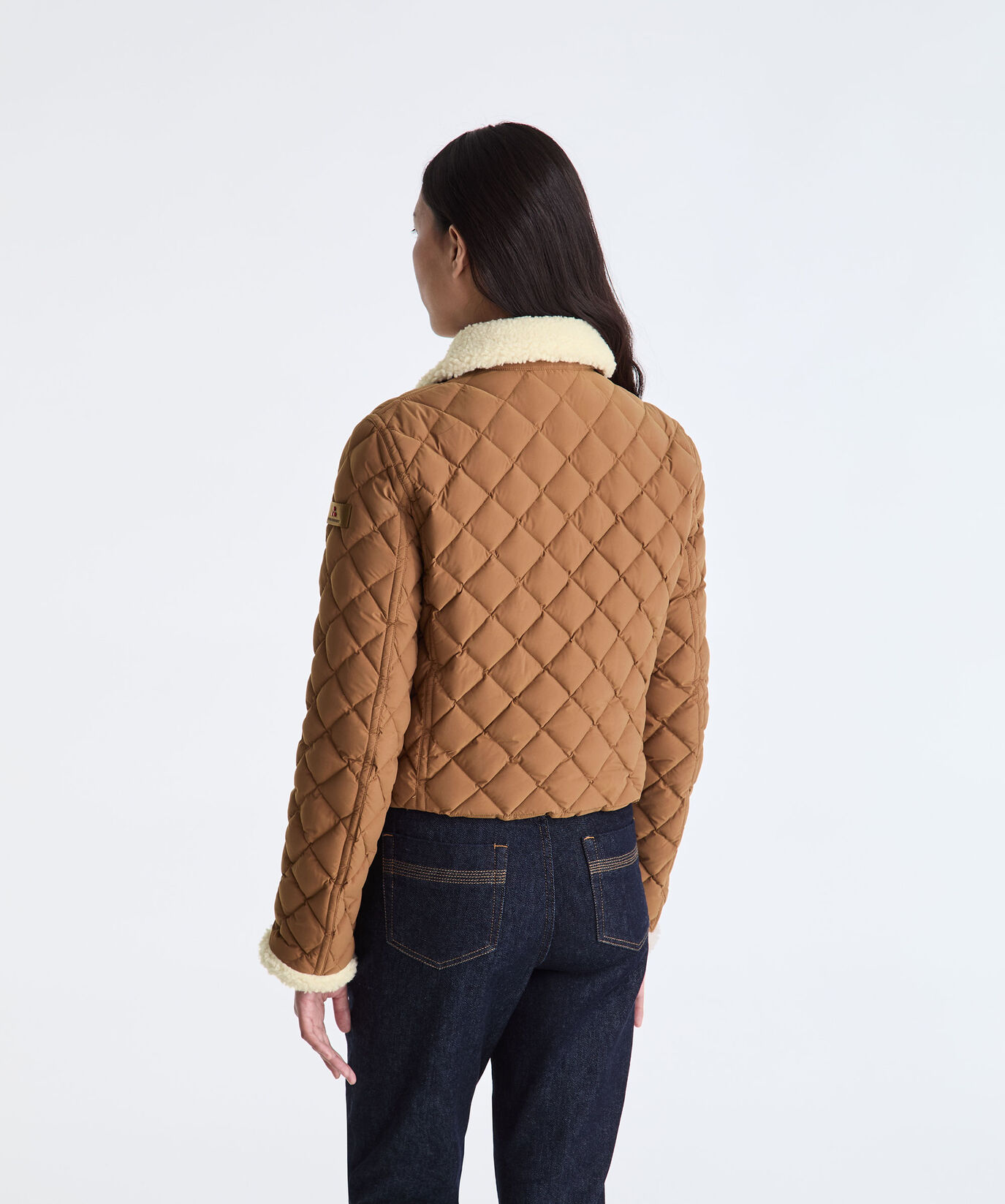
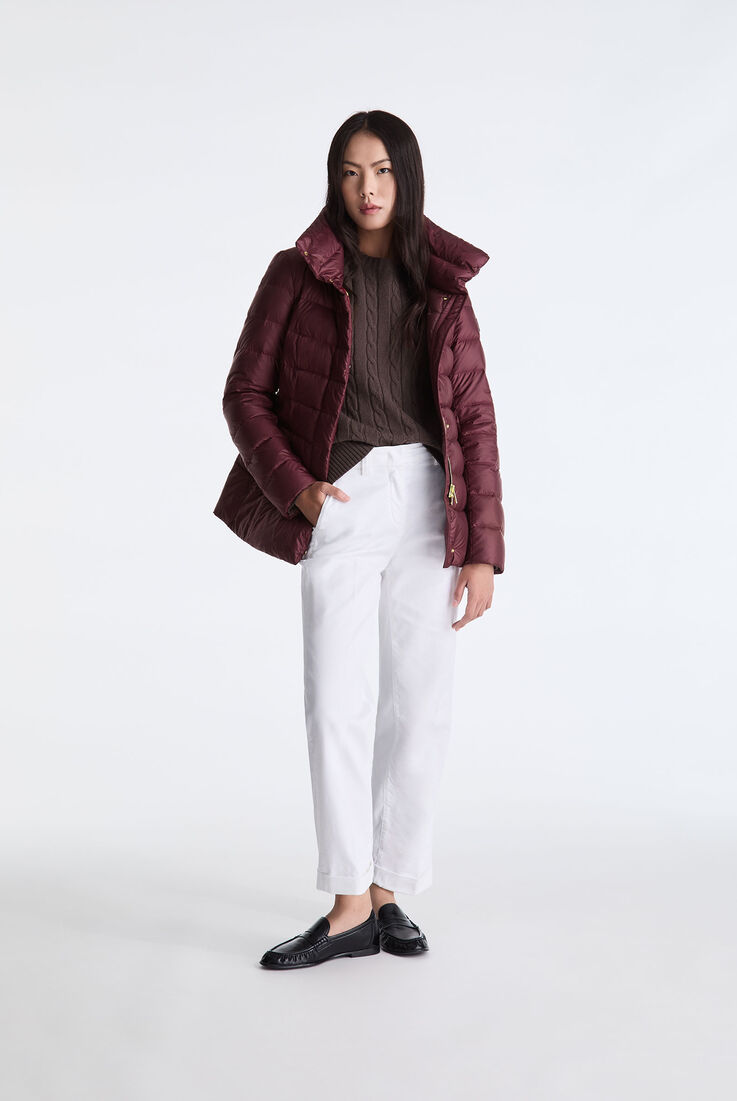
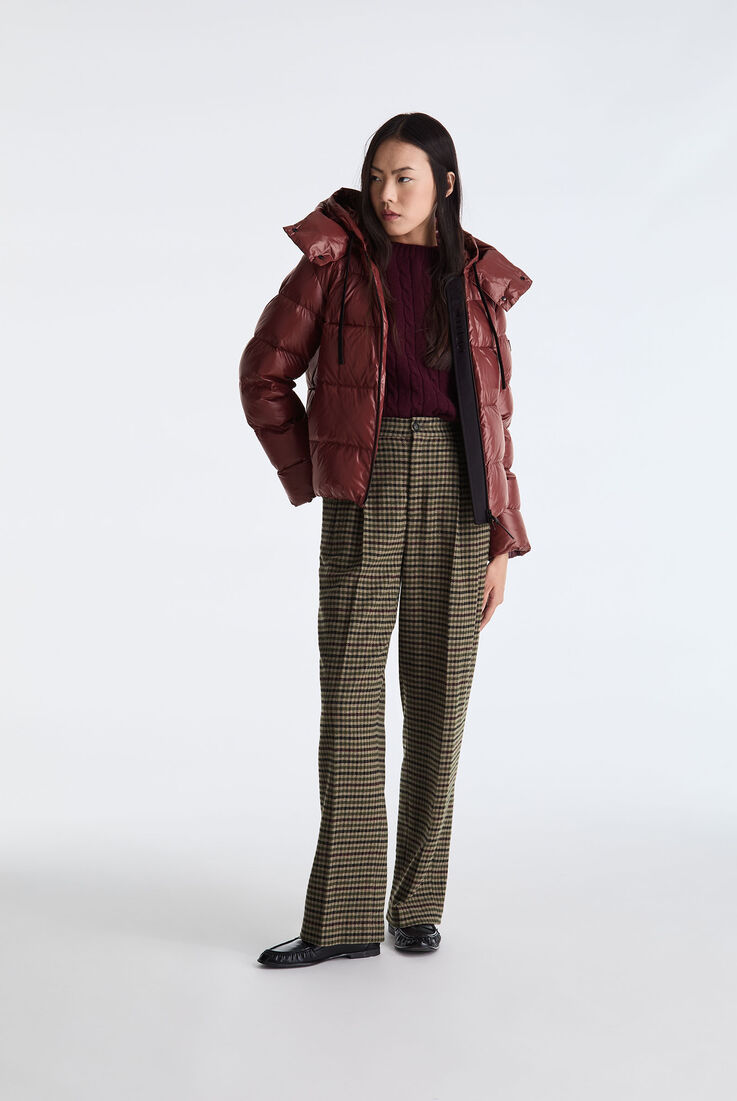
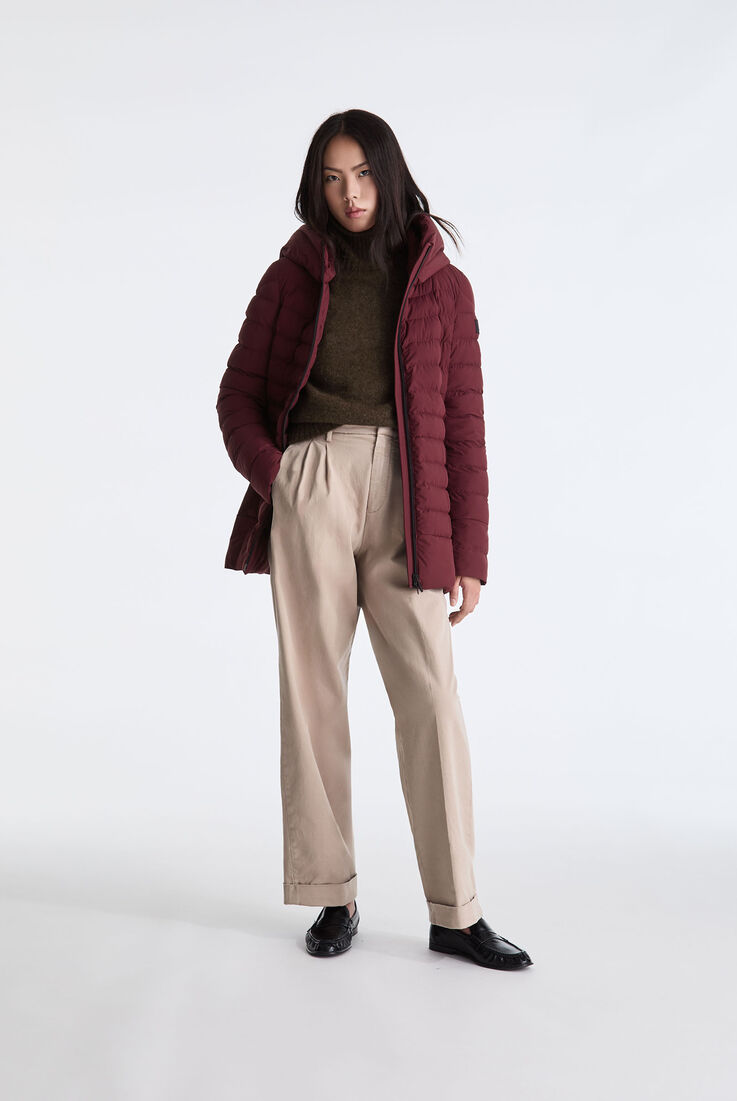
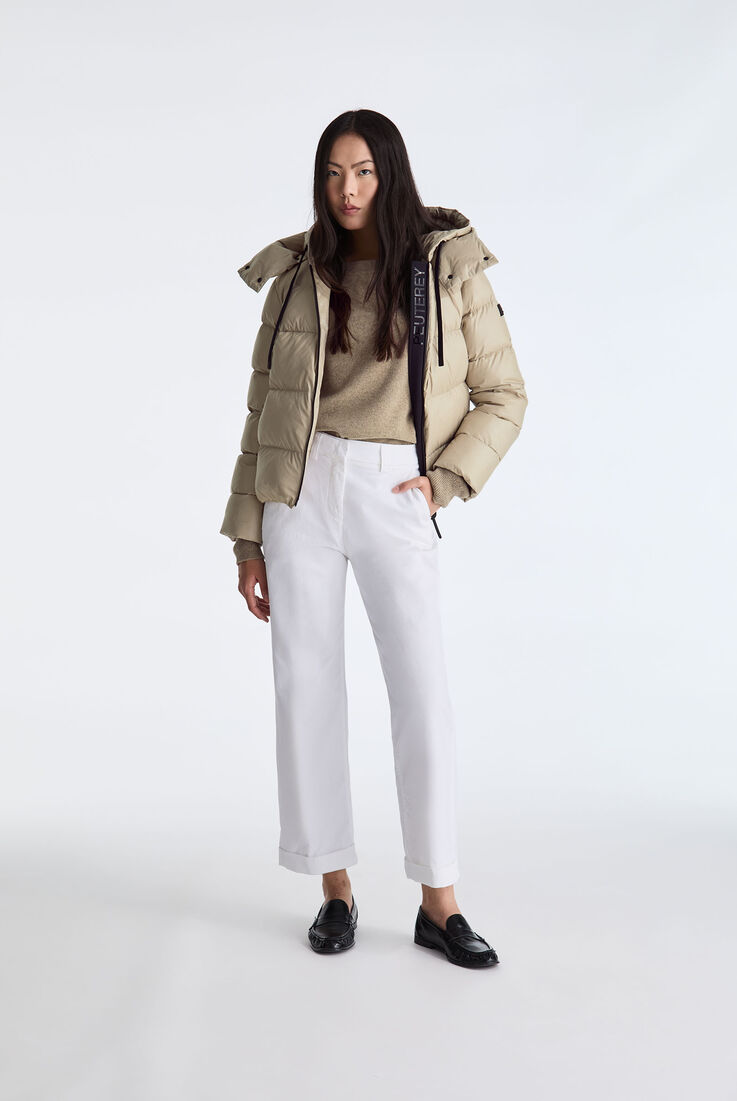
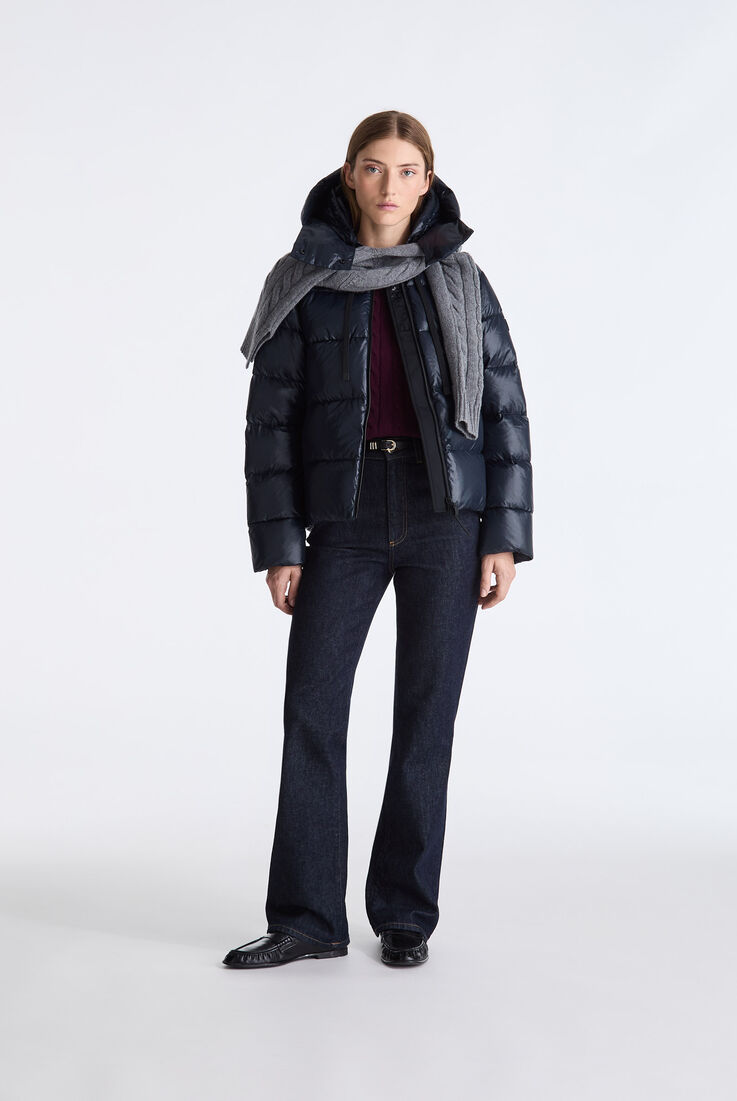
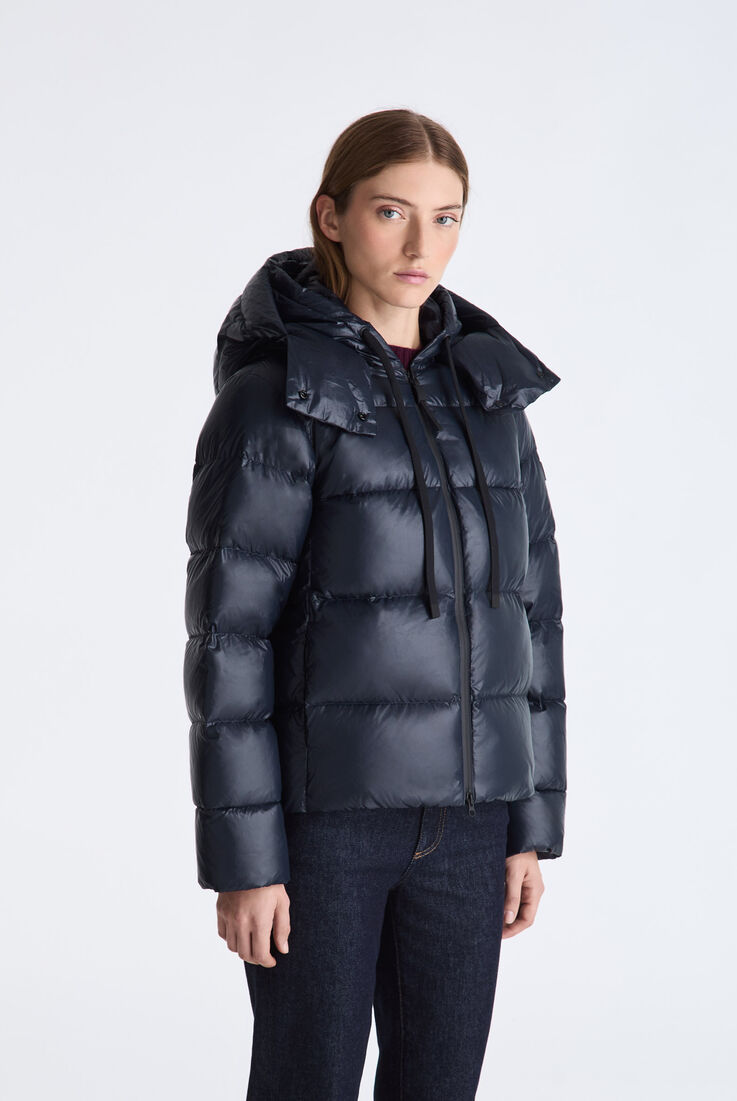
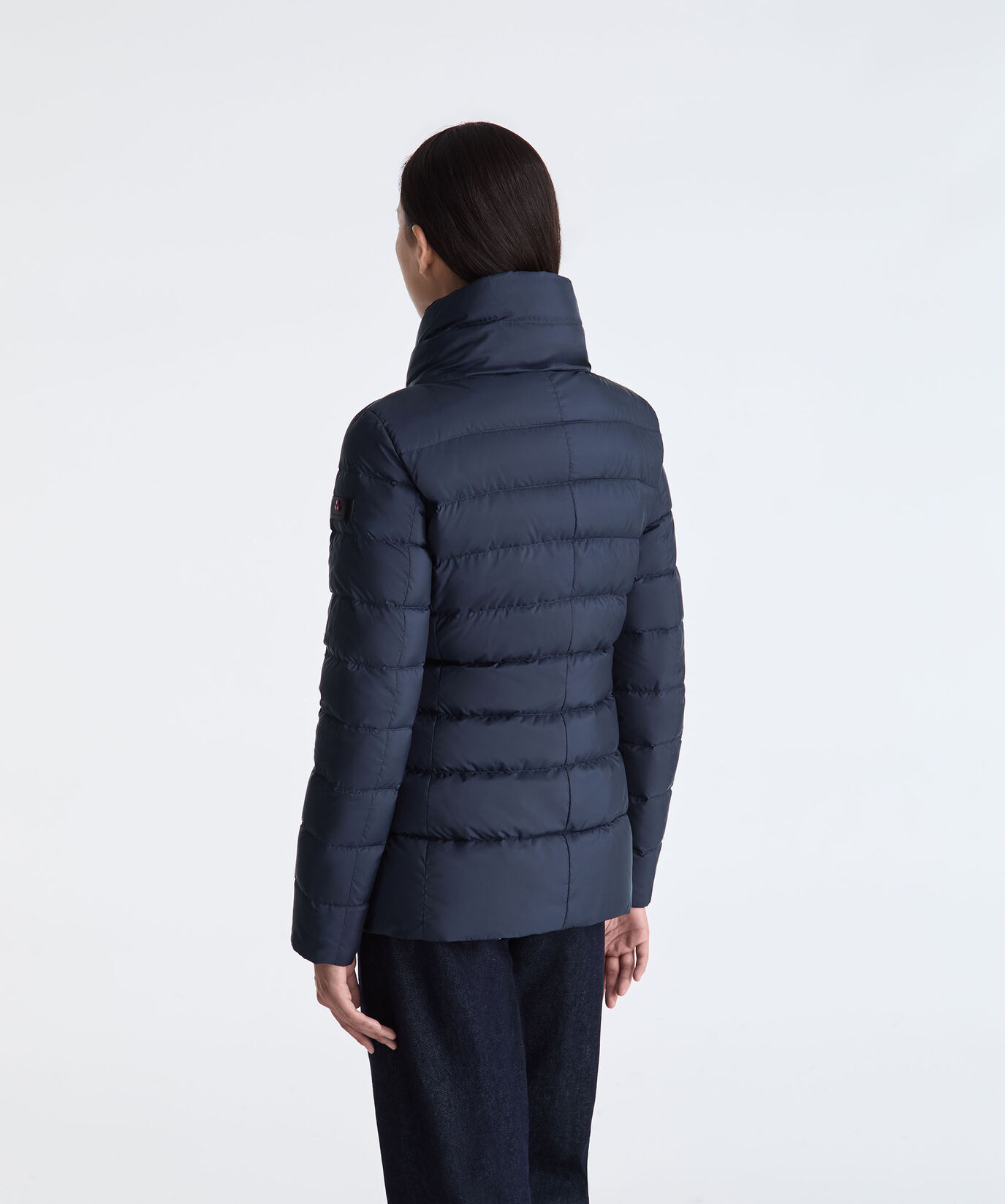
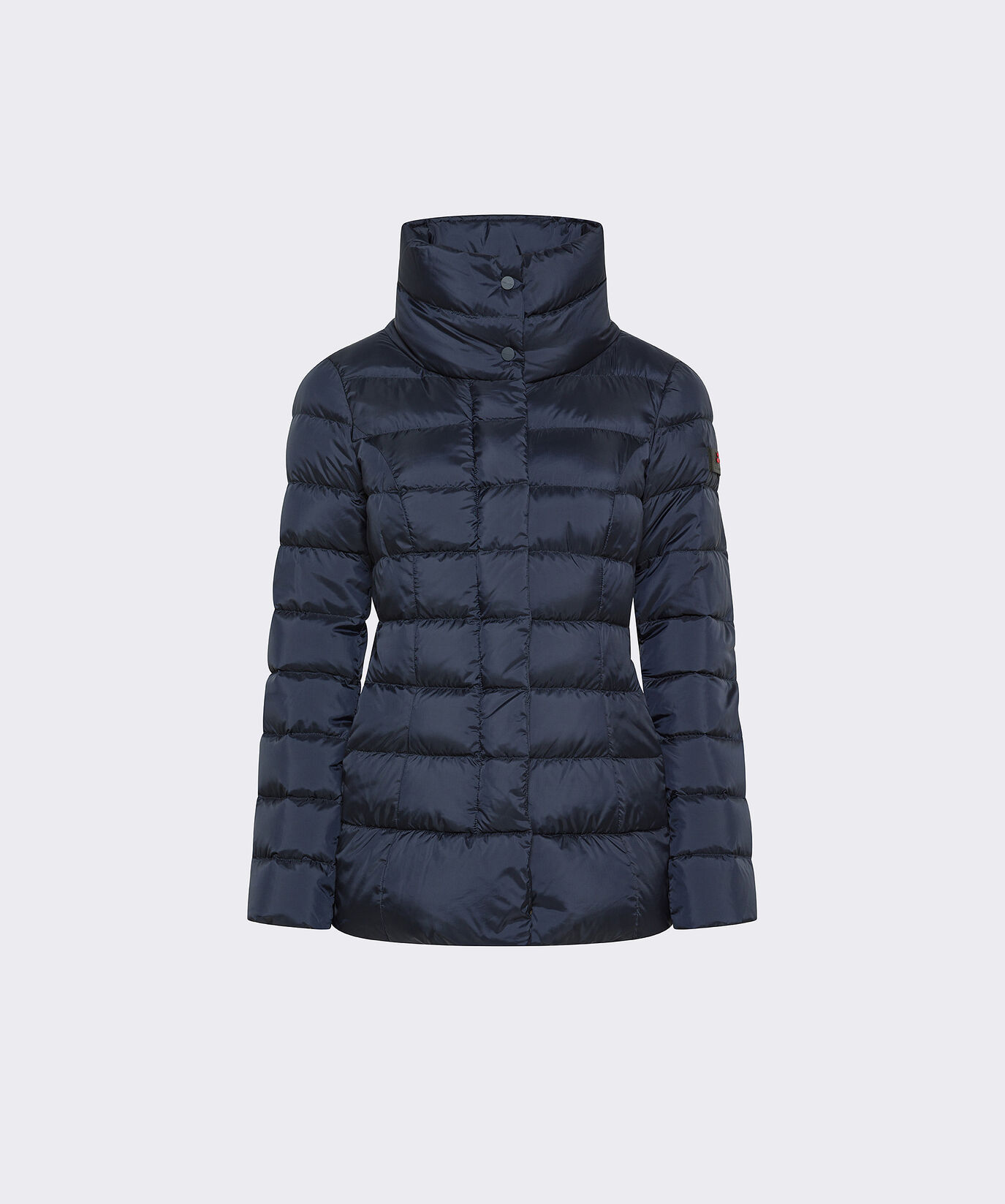
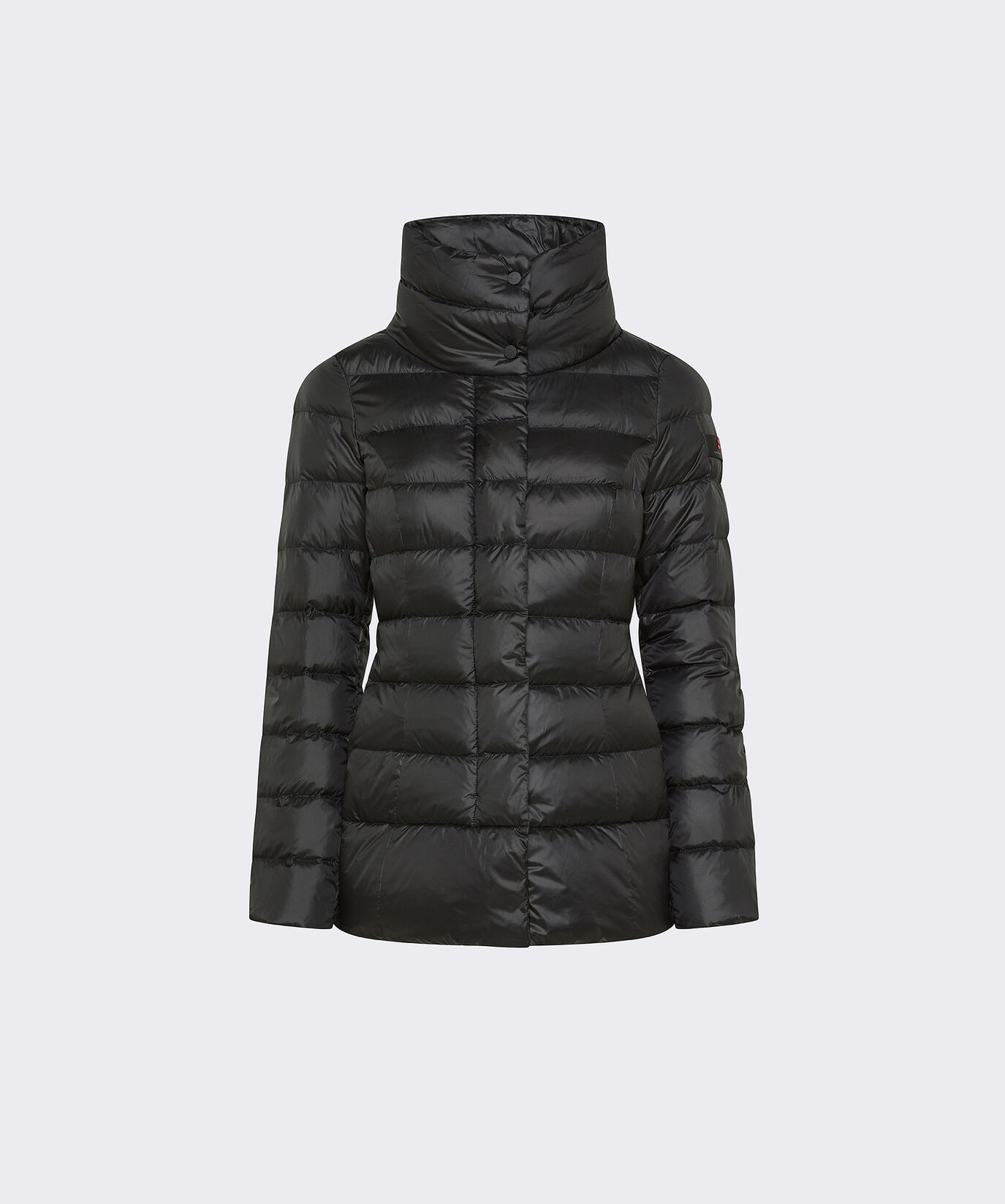
Finish, palette and volume work together to shape the character of a winter puffer. Matte fabrics create a more understated, minimal appearance, while glossy or subtly satin finishes catch the light and can accentuate quilting and volume. The choice of shade also influences the overall look: a navy or black women's puffer jacket provides a versatile foundation for everyday dressing, while beige, cream and taupe bring lighter tones into a winter wardrobe. Brown, green and burgundy introduce richer, warmer hues, while brighter colours can turn the jacket into the focal point of an outfit. Together, the chosen palette and finish can give the outerwear either an understated everyday feel or a much stronger visual identity.
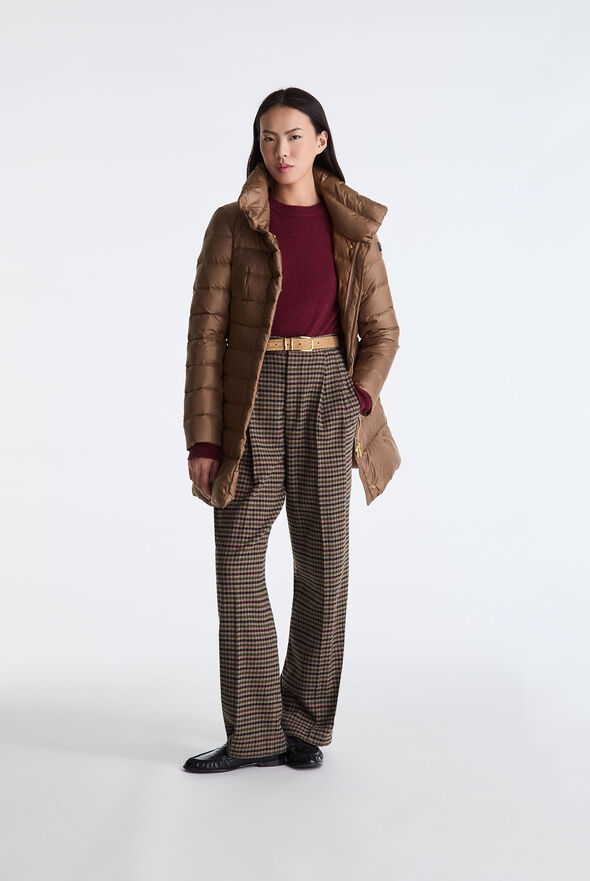
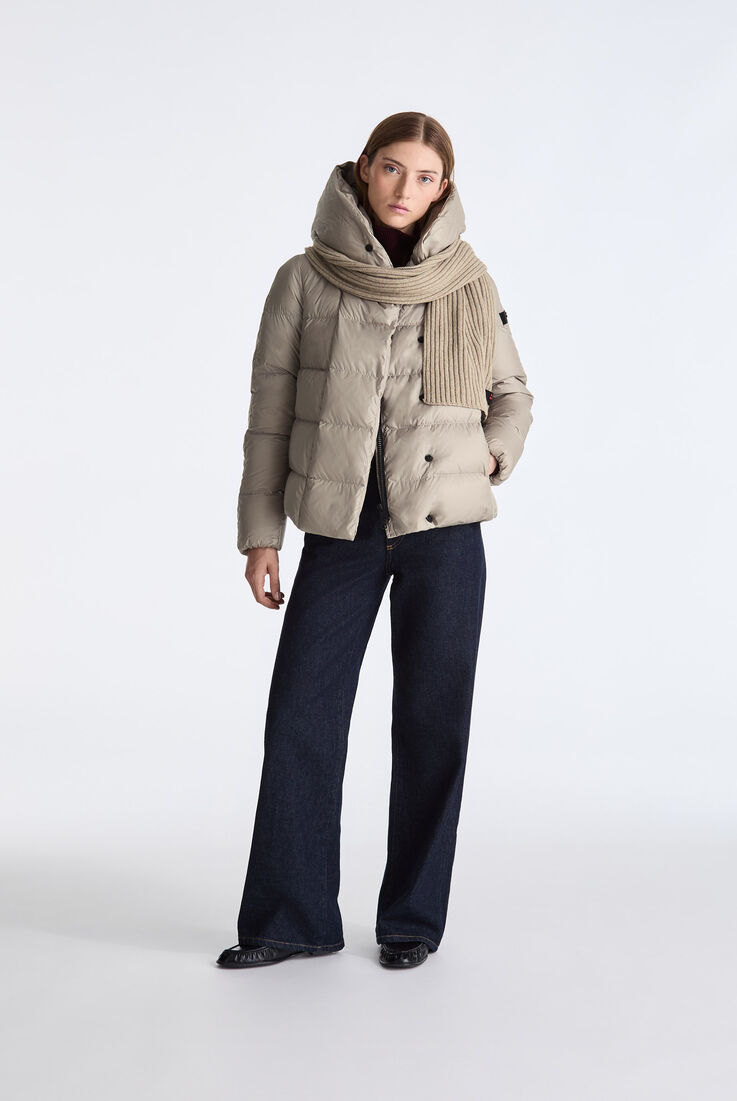
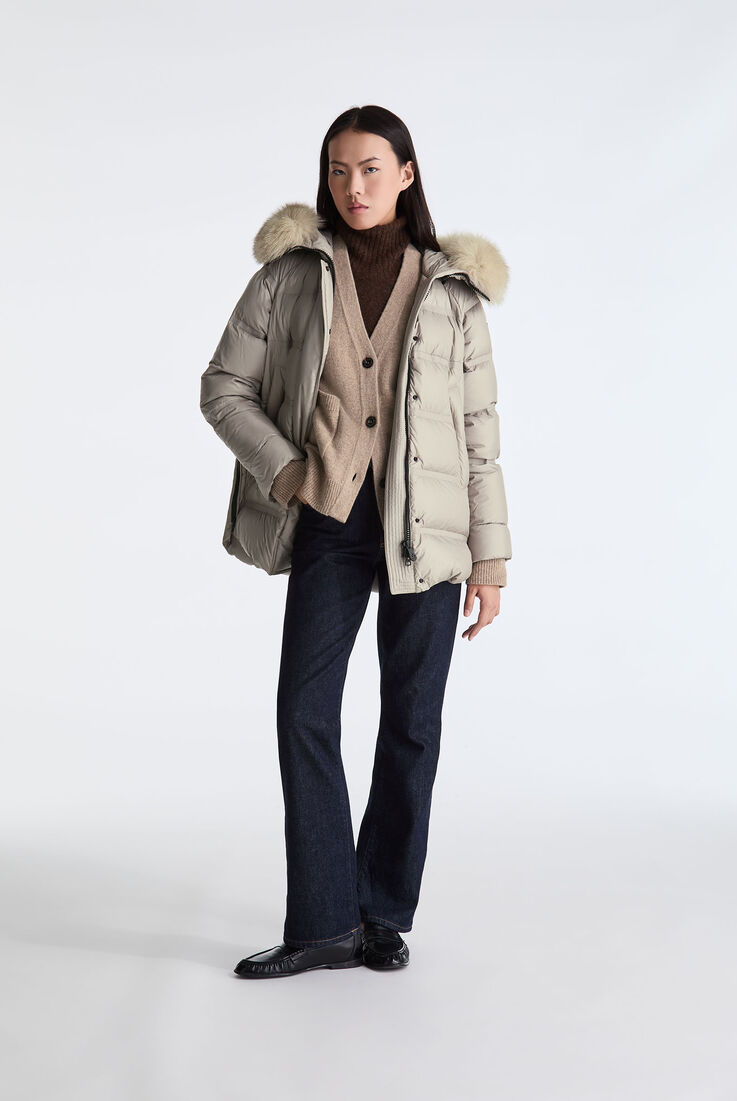
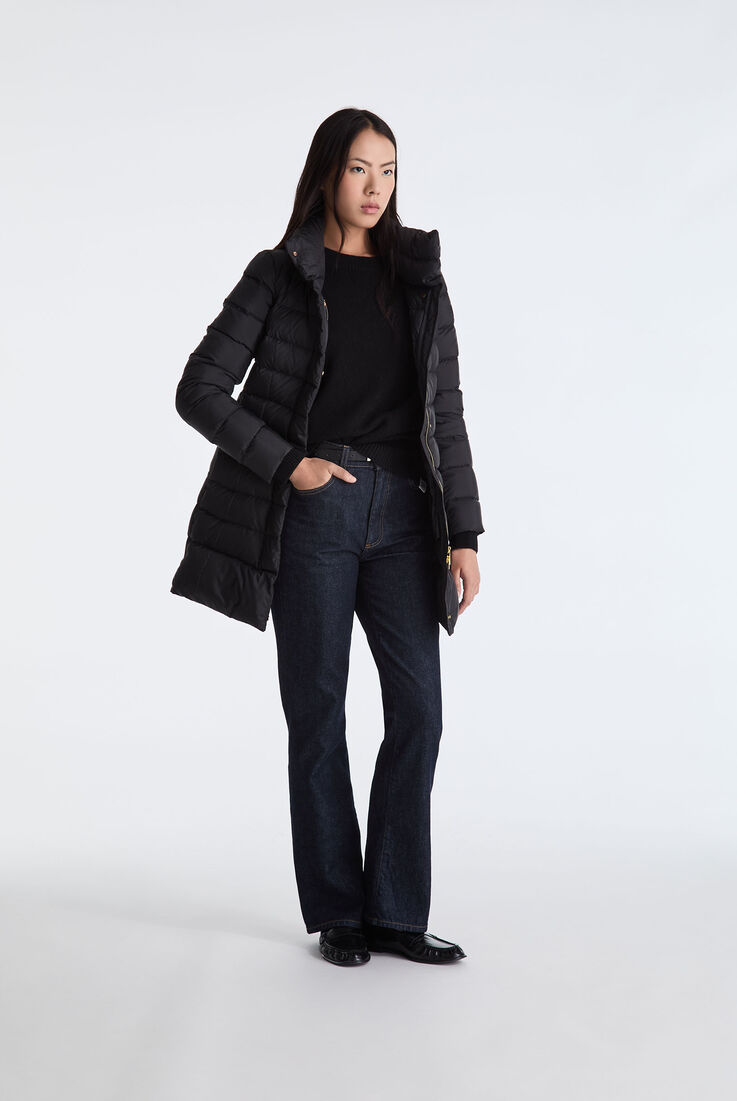
Balanced proportions are a useful starting point when styling a puffer jacket. Longer or more voluminous designs work particularly well with straight or streamlined women's trousers, while shorter or fitted jackets leave more freedom to experiment with volume elsewhere in the outfit. Layering can also be adapted to the cut: fine knitwear or a slim roll-neck adds warmth beneath a close-fitting jacket while keeping the silhouette clean, whereas roomier styles can accommodate heavier jumpers and cardigans. This flexibility allows a winter puffer to move easily between polished city and workwear looks and more relaxed combinations for weekends and leisure.
The correct way to care for a women's winter down jacket depends on its individual materials, so the garment care label should always take priority. Natural-down insulation requires particular attention during washing and drying to prevent the filling from clumping in individual sections. Redistributing the down periodically as it dries can help restore an even loft, and the jacket should be completely dry before being stored. Synthetic fills may require different care, while excessive heat can affect the structure of some fibres. Technical outer fabrics, membranes and surface treatments may also lose some of their performance when exposed to unsuitable detergents or cleaning methods.
A full wash is not always necessary. Where the care instructions allow, minor marks can be spot-cleaned and the jacket aired between wears. Storage matters too: keeping a puffer compressed for extended periods can reduce the loft of the insulation, so allowing the garment sufficient space helps preserve both its original shape and thermal performance for the following winter.